 Arts Access Aotearoa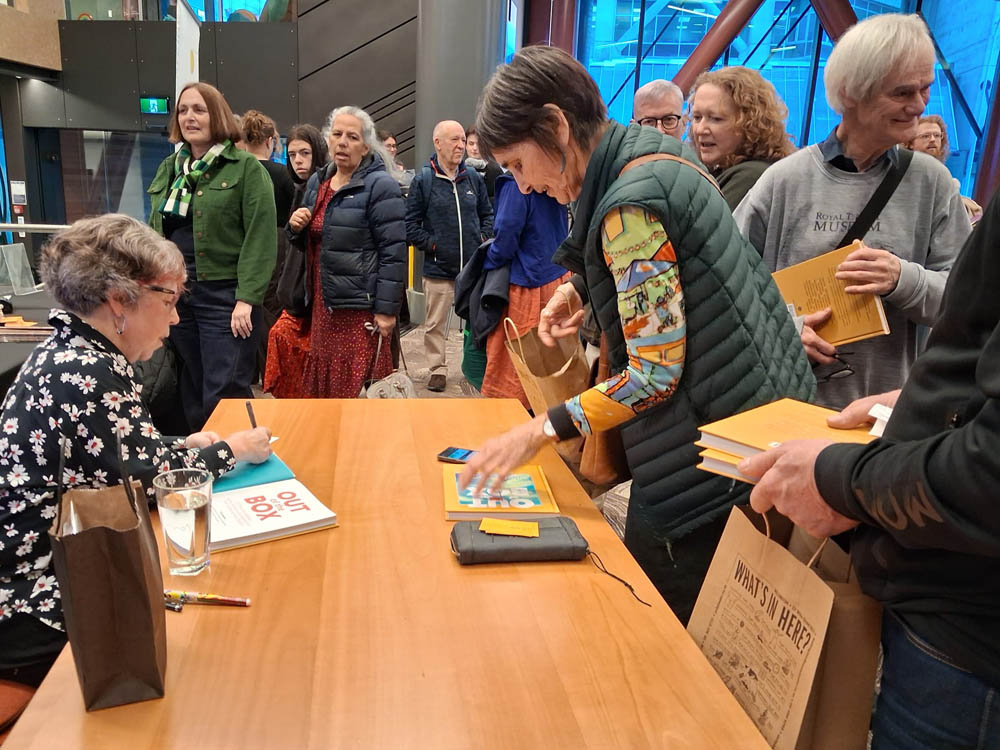
When Trish Harris wrote her memoir "The Walking Stick Tree" ten years ago, she wanted to give voice to an experience seldom reflected in New Zealand writing: living with a disability.
Her subsequent poetry collection, "my wide white bed" (Landing Press, 2017), found beauty, humour and humanity during a prolonged hospital stay.
Read Trish Harris’ poetry navigates hospital life
Now, with "Out of the Box: 25 Deaf and disabled artists, activists and adventurers from Aotearoa New Zealand" (Otago University Press), she turns her attention to telling other people's stories – people who have challenged assumptions, pursued their ambitions and helped shape their communities.
The book is aimed at young people, and anyone interested in reading about people and Aotearoa’s history of disability.
“I’d especially love it if it connected with young Deaf and disabled people; if they found gems – a reflection, a quote, a line – that made them feel it’s great to be who they are,” Trish says.
In each story, there are ideas and comments that have stayed with her – things to hold on to and ponder. For example, Chantelle Moriah (they/them) says: “It’s okay to struggle and to find things hard. It’s important to learn to love yourself regardless, but it’s okay to have days where that’s just not happening.
“I promise you, what people think of you in high school does not matter. It’s hard now, but it will get better.
“Many of the struggles that come with being neurodivergent could be erased if society accepted us as we are.” (p91)
"I want that box to be broken open!"
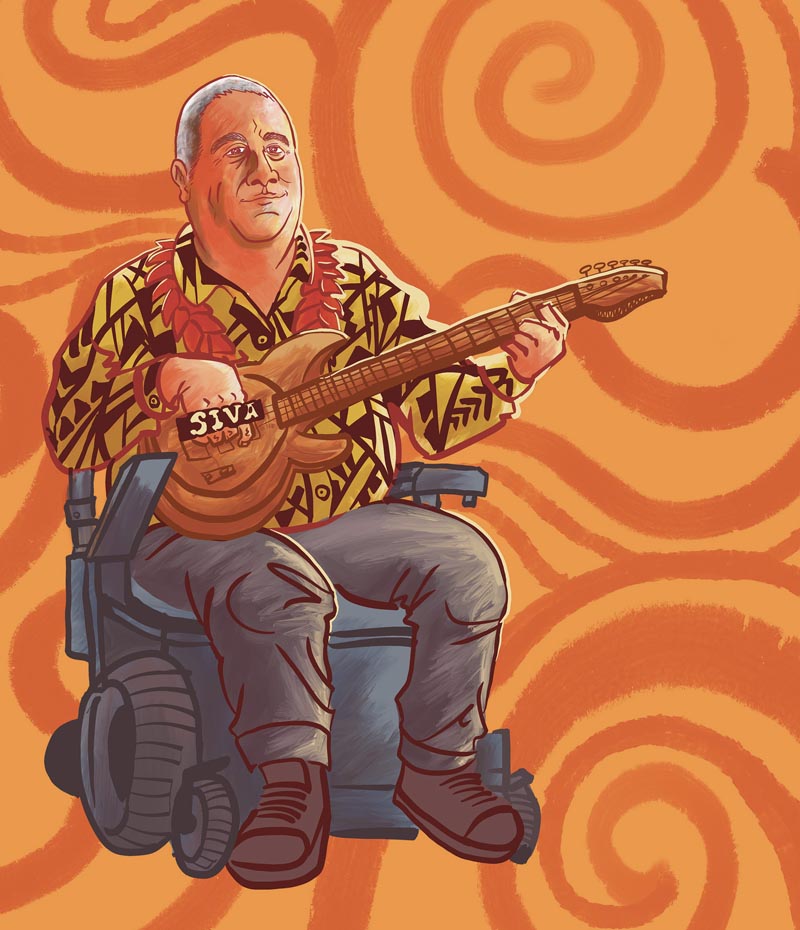
The title comes from a quote by Mojo Mathers, the first Deaf person elected to New Zealand's Parliament: "Deaf or disabled people get put in a box. It's frustrating, it's tiring and it's boring. I want that box to be broken open!" (p99)
Rather than presenting disability as something to overcome, Trish explores the barriers created by society and the people who live life on their own terms despite the barriers.
The cover illustration of a mountain with a red flag at the top suggests significant achievement despite the mountains that Deaf and disabled people face every day.
“These are mountains that could be flattened if the government wanted to,” Trish says. “As for the red flag, perhaps that’s the common thread. Everyone profiled has broken out of the box and claimed their space. They’ve said, ‘I’m doing life my way despite the barriers'.”
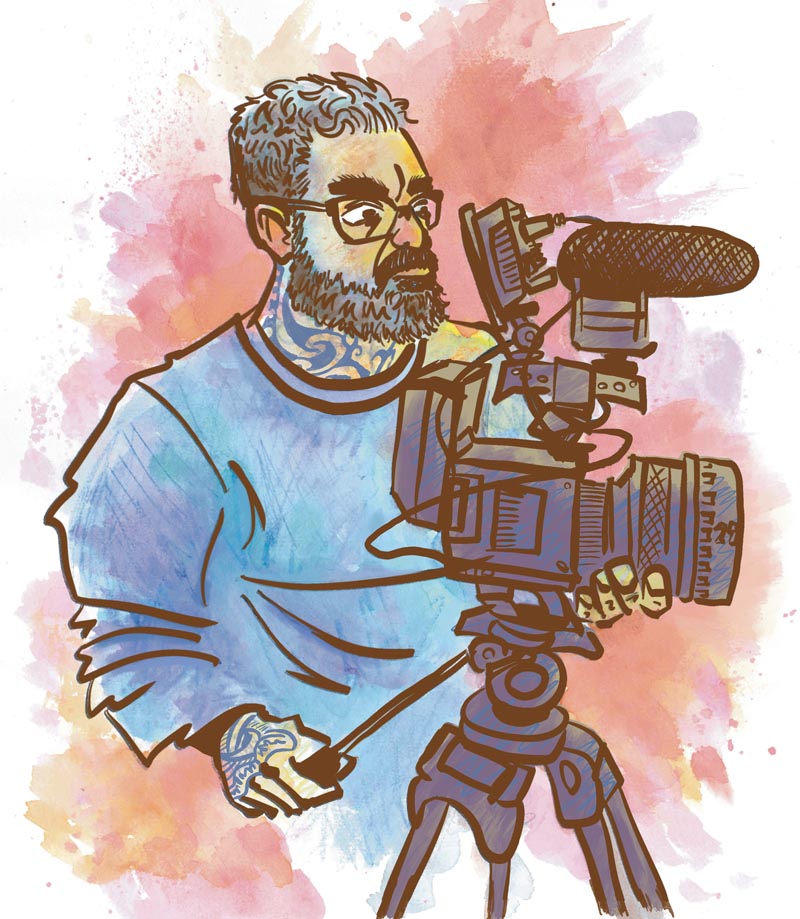
Illustrations by Benjamin Ackerman and Peter Woodfield accompany the profiles, while the second half of the book presents a timeline of Deaf and disability milestones in Aotearoa New Zealand, from the 1840s to today.
”If we know about our past, we can see how change has been made, how hard-fought it’s been, and how we can’t take anything for granted,” Trish says.
Coming to see disability as an important part of her identity
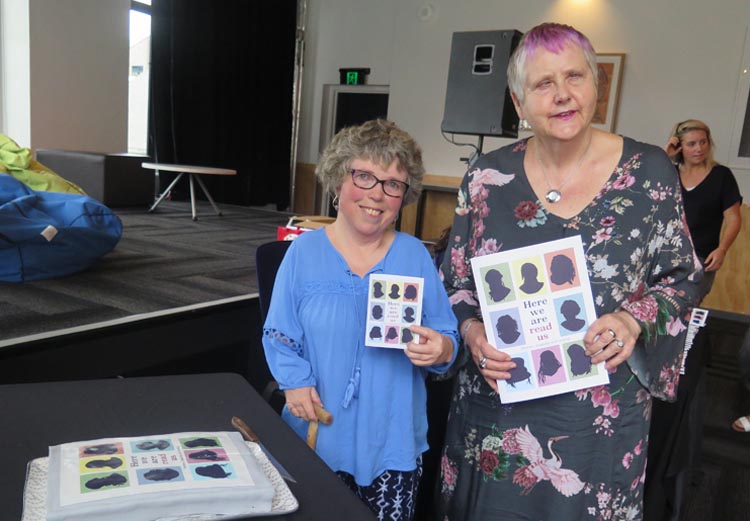
Trish knows a lot about climbing mountains. Growing up with rheumatoid arthritis, she spent much of her childhood adapting to environments that were not designed with disabled people in mind. In The Walking Stick Tree (Escalator Press, 2016), she describes being carried upstairs to classrooms because there was no lift; learning to drive an adapted car; and gradually coming to see disability as an important part of her identity rather than something to hide.
Read Memoir takes reader inside Trish Harris
Alongside her books, Trish has worked across publishing, radio and disability media. She co-founded Tigers and Tulips, which ran writing workshops for disabled women writers in Wellington, and later co-founded Crip the Lit with Robyn Hunt to create opportunities for Deaf and disabled writers to share their work and build audiences.
She’d long believed Deaf and disabled people should be better represented in stories for children and young people but she wasn’t sure what role she might play in making that happen.
"When does a drifting thought become action? I'd written two books and helped set up Crip the Lit as a way of sharing our stories. Did I have enough energy to write another book?"
Fellowship application provided catalyst
An application to Arts Access Aotearoa's Deaf and Disabled Artist Fellowship in 2021 provided the catalyst. Although unsuccessful, it crystallised the idea of writing a book for young readers about the lives of Deaf and disabled people in Aotearoa.
Funding from Tāwhia Copyright Aotearoa (formerly Copyright Licensing New Zealand), Creative New Zealand and, finally, Arts Access Aotearoa's one-off Accessibility Impact Fund supported Trish to research and write the book.
Trish also credits Otago University Press for embracing the kaupapa of the project. "I think the cover emits a positive, hopeful vibe and the vibrant illustrations inside capture each person, making the profiles pop for a younger readership."
For Trish, "Out of the Box" is ultimately a book about Deaf and disability pride.
"Someone said to me that if the book had been around when they were young, it might have stopped them trying to pass as non-disabled,” she says. “Another person said that it would have let them know there were other people trying to change the world for the better and they didn’t have to fight battles alone."
Want to keep reading?
Discover more of our latest news and stories.
... loading ...