
 Arts Access Aotearoa
Strong arts programmes in prisons do not happen by accident. They depend on practitioners who understand not only their artform but also the particular responsibilities that come with working in correctional environments.
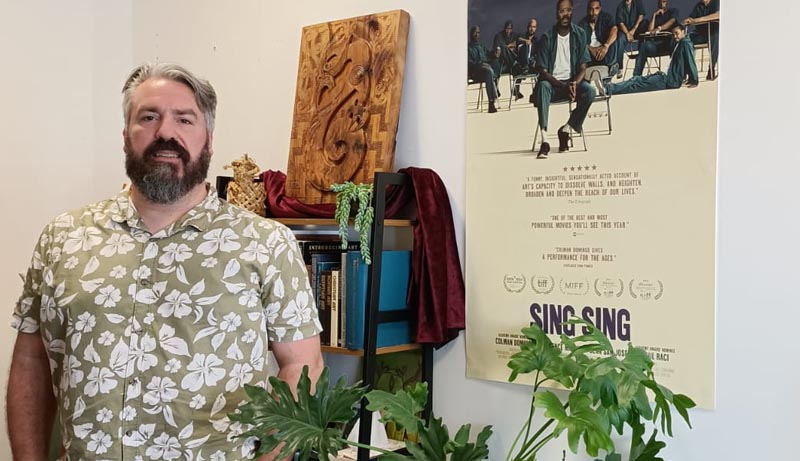 For Neil Wallace, Arts and Justice Advisor at Arts Access Aotearoa, this includes navigating complex systems, building trust, working safely and ethically, and understanding the potential of creativity to support growth, reflection and connection.
That understanding sits at the heart of the Arts in Corrections Educator (ACE) course that Neil developed to support artists, educators, therapists and community practitioners wanting to work in prisons.
The first course of its kind in Aotearoa New Zealand (possibly the world), it provides a structured pathway into arts and justice practice, grounded in “Te Ara ki Runga The Path Up”, Arts Access Aotearoa’s best-practice guide for delivering arts programmes in correctional settings.
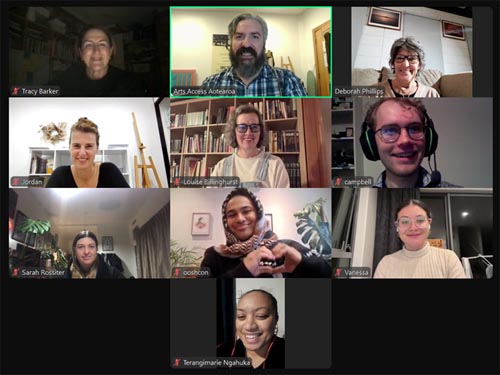 The 10-week pilot in 2025 brought together 22 artists, educators, therapists and community practitioners from across Aotearoa. Together, they explored the principles of best practice, developed programme proposals and became part of a growing community of arts and justice practitioners.
“This is where leadership begins to emerge,” Neil says.
The value of this approach was recognised recently in the publication of “Establishing a National Framework for Volunteer Arts Practice in Prisons: Aotearoa New Zealand’s Arts in Corrections Educator Course” in the inaugural edition of the “International Journal for Creativity Inside”.
The article, written by Neil Wallace, explores the development of the course and its role in creating a nationally consistent framework for volunteer arts practice in correctional settings.
Attracting international recognition
The work also attracted other international attention. In 2025, “Te Ara ki Runga” became the focus of an International Teaching Artist Collaborative (ITAC) Think Tank, where international practitioners examined the guide as a model for culturally grounded arts practice in justice settings.
Neil says that Think Tank participants recognised it as a rare example of Indigenous-led guidance, highlighting Aotearoa’s leadership in embedding cultural integrity within arts and corrections practice.
“But training is only the beginning,” he says.
Feedback gathered following completion of the inaugural ACE course highlighted several recurring themes that were later echoed in the findings discussed in the Journal article.
Value of shared reflection and learning
Participants spoke about the value of having a shared framework for practice, opportunities for reflection, and the chance to engage with others working in what can often be an isolated field.
Reflecting on the experience, one participant noted: “We built a foundation for best practice in corrections guided by Te Ara ki Runga.”
Others described the programme as an opportunity to think more deeply about their role and responsibilities as practitioners.
“It wasn’t just a professional journey but it was a personal journey as well.”
“These reflections point to an important distinction between training and learning,” says Neil, a former art and design tertiary lecturer.
“Training provides knowledge and tools. Learning happens when people begin to critically examine their own practice, assumptions and responsibilities.”
Participant feedback also reinforced the values that sit at the centre of both “Te Ara ki Runga” and the ACE course: dignity, connection, cultural integrity and the belief that every person has a story worth hearing.
Course participant reflections
At the end of the course, one participant reflected: “The arts have the ability to reach people in profound ways, especially those who feel unheard or unseen.”
Another reflected on the importance of storytelling: “It is through creativity and empowered storytelling that our people can articulate their lived experience and can do so from a place of truth and mana.”
Leadership in the arts and justice sector is not necessarily about position or authority, Neil says. It’s about contribution. It’s about sharing knowledge, supporting others and helping shape the future of the work.
Te Rā Lived Experience Advisory Ropu
Many ACE course graduates remain connected through Ngā Toi i te Poipoi, the Aotearoa Arts and Justice Network. Some contribute to advisory groups such as Te Rā Lived Experience Advisory Ropu, helping ensure lived experience continues to inform and shape the future of arts and justice practice in Aotearoa.
Deborah Phillips, founding Te Rā member and raranga artist, writes in her blog: “It’s an enlightened concept to have people who have done time in prison providing insights and teaching the artform that helped us rise above it all; to heal and thrive. Acting as role models, projecting hope.”
Neil is currently redeveloping the ACE course into a modular online format, making it more accessible while retaining opportunities for shared reflection, discussion and connection.
“Our goal is to strengthen the capability of a growing sector and the people working within it,” he says. “Effective arts practice in correctional environments requires more than creativity. It requires training. It requires a commitment to learning and it requires the leadership to turn knowledge into meaningful action.”