
 Arts Access Aotearoa
Humour, honesty and hope are woven through a new work, celebrating musician and disability advocate Fonitī Pati Umaga and opening at Te Ahurei Toi o Tāmaki Auckland Arts Festival from 5 to 8 March, followed by performances at Aotearoa New Zealand Festival of the Arts from 12 to 14 March.
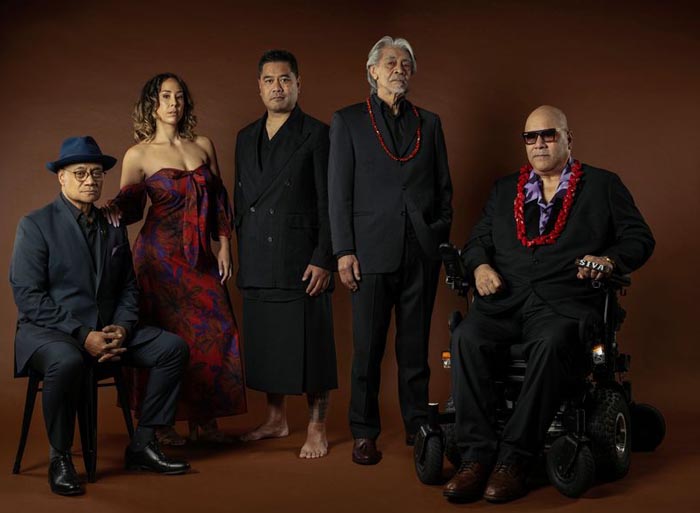 “Music Portrait of a Humble Disabled Samoan” is backed by a powerhouse Pacific creative team that includes Maiava Nathaniel Lees (director), Oscar Kightley (writer), Pos Mavaega (composer and music director), Neil Ieremia (choreographer) and Sasha Gibb (creative producer).
Pati sits at the centre of the work – a “humble disabled Samoan” whose life has been shaped by faith, family, music and disability. The show traces moments, memories and questions that have defined his journey, using music as the primary storyteller.
“I wanted to show a different perspective of disability through a cultural perspective and break down stereotypes about what disabled people can achieve,” Pati says. “Performing in two major arts festivals provides a powerful platform to share our disability narratives.”
As part of Pati's commitment, there are NZSL interpreted, audio described and relaxed performances at both festivals.
To buy tickets and learn more about the Festivals' accessibility programmes, you can visit their websites.
Church and community the rhythm of daily life
Pati grew up in Wainuiomata in a Samoan household where church and community set the rhythm of daily life. Like many children of his generation, expectations were clear. His father offered him two possible futures: become a minister or become a lawyer.
 sm.jpg) Music, however, was already calling. Pati’s early life was steeped in music – thanks to his father, who steered the siblings towards music instead of rugby. In 1979, the family set up a band called Kabasa, which included Pati and two of his siblings, and played at Wellington gigs.
Music, however, was already calling. Pati’s early life was steeped in music – thanks to his father, who steered the siblings towards music instead of rugby. In 1979, the family set up a band called Kabasa, which included Pati and two of his siblings, and played at Wellington gigs.
Then in the 1980s, Pati found national success as a bass player in the Holidaymakers, a band whose 1988 hit “Sweet Lovers” topped the charts in New Zealand and helped shape the country’s contemporary pop music landscape.
Through his experience of touring, recording and performing with the Holidaymakers, Pati saw how music connected people and enabled them to express their identity.
“I saw how music bridged cultural and social divides, telling stories and giving people a voice,” he says.
Pati’s belief in the power of music was tested in 2005 when a fall in the bathroom left him with a spinal injury. He became a tetraplegic. The years that followed were marked by loss, darkness, frustration and adjustment as he learned to live as a disabled man in a society that often misunderstands disability.
Before his injury, Pati was involved in nurturing Pacific music talent, helping to establish pathways for young artists and contributing to the growth of contemporary Pacific sound in Aotearoa.
“After the accident, I went through some tough times and isolation could easily have taken hold,” Pati says. “But music was my way back into connection, purpose and community.”
Challenging stigma and building leadership
He also became a disability advocate, constantly challenging stigma and building leadership in his various roles.
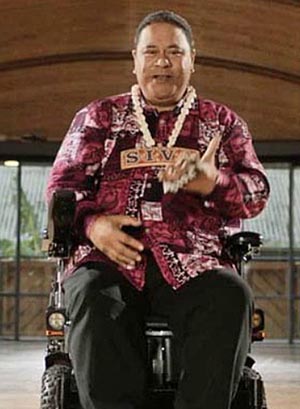
 sm.jpg "Performing Siva") And in 2016, he composed a song called “Siva” and produced a music video, which featured disabled dancers and Pati rapping about inclusion and diversity.
And in 2016, he composed a song called “Siva” and produced a music video, which featured disabled dancers and Pati rapping about inclusion and diversity.
A central thread in “Music Portrait of a Humble Disabled Samoan” is the tension between humility and visibility, reflected in the title of the work. Pati has spent much of his life working behind the scenes, supporting others and advocating for change without seeking attention.
This production places him centre-stage, not as an object of inspiration but as a person telling his story and opening up conversations about access, dignity and belonging.
 “It’s daunting and exciting at the same time,” Pati reflects. “I’m a little bit apprehensive because of the focus on me. I’m not used to it.
“But I have an incredible team around me and I trust them completely to portray both my journey and my culture with integrity.”
Humour is woven through the show despite its serious themes, Pati says. Laughter becomes a form of resilience, a way of asserting humanity in situations that might otherwise feel overwhelming.
As the show opens in Auckland and then Wellington, it invites audiences to listen differently – to music, to disability and to Pacific experience. Through music and story, Pati Umaga offers a portrait that is both personal and political.
“I hope that through the show I can honour the legacy of my parents, who came to Aotearoa in the 1950s so their four children could have more opportunities,” Pati says.
Fonotī Pati Umaga QSM was the recipient of Te Putanga Toi Arts Access Artistic Achievement Award 2015 and the inaugural recipient of the Pacific Toa Award at Creative New Zealand's Arts Pasifika Awards 2019.
Te Ahurei Toi o Tāmaki Auckland Arts Festival and Aotearoa New Zealand Festival of the Arts are members of the Arts For All Network, facilitated by Arts Access Aotearoa. Learn more about the Arts For All Network.