 Arts Access Aotearoa
Are you suffering from the condition known as arts scepticism? Symptoms include espousing the idea that the arts are a nice-to-have and a waste of taxpayer money. If so, a new treatment has just become available. It’s "Art Cure: The Science of How the Arts Transform our Health" by UK scientist Professor Daisy Fancourt (Cornerstone Press, 2026).
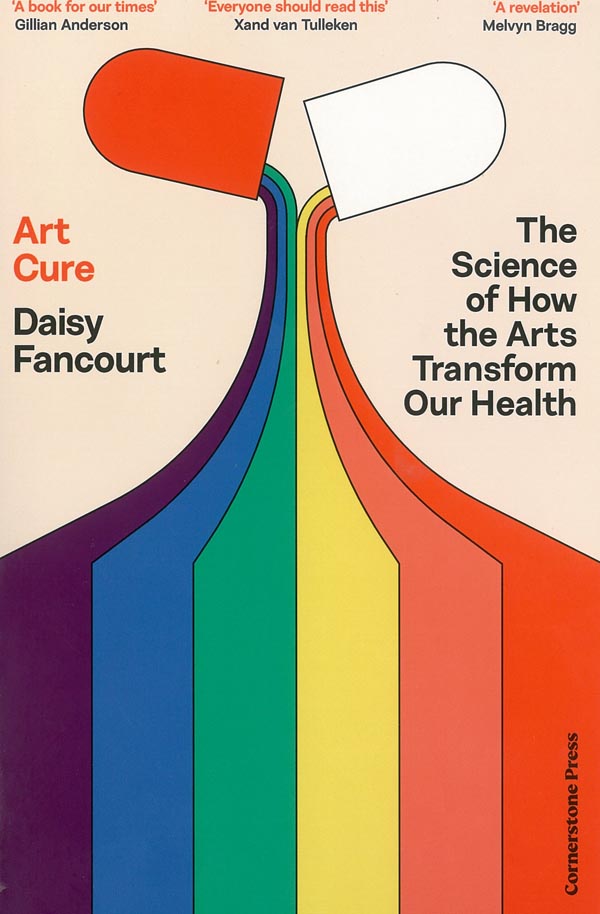 The first chapter of the book is called “Do we need art?” The next seven chapters provide a robust, compelling answer to this question. Combining individual case narratives with a vast and varied body of evidence from research studies around the world, Fancourt outlines the many ways the arts enhance general wellbeing, mental health, brain health and physical health, and have an important role to play in health promotion and health equity.
“Art – as you’ll see – alongside diet, sleep, exercise and nature, is the forgotten fifth pillar of health”
It’s likely that if you are an arts sceptic, you may think this just sounds like blatant advocacy, cherry-picking evidence to support Fancourt’s opinion. My answer would be that yes, Daisy Fancourt is undoubtedly an advocate for the arts but also, like any good scholar, she is measured in her evaluation of the evidence, presents counter-evidence along the way, and is clear that she is not arguing that the arts are a panacea for all social and health problems.
What she’s aiming for in this book is to bring this “enormous body of research [about arts and health] into public conversation”.
“Government commissioned economists in the UK have used our studies to estimate the societal financial impact of improvements in well-being in adults as a result of engaging with the arts. Amongst working-age adults alone, they estimated £15 billion of cost savings a year to society.”
There is a tendency in some arts and health literature, or when cost-benefit analyses are being applied, to reduce arts experiences to a neat, reproducible, predictable formula.
The rich diversity and complexity of the arts
What I appreciate about this book is that it explicitly warns against this. Fancourt is clear that it’s the rich diversity and complexity of the arts that make their effects on human health and wellbeing so profound.
 landscape sm.jpg) Different artforms and different kinds of arts experiences involve different combinations of “active” artistic ingredients and have different outcomes, not all of which are always beneficial.
Different artforms and different kinds of arts experiences involve different combinations of “active” artistic ingredients and have different outcomes, not all of which are always beneficial.
Importantly (to me anyway), Fancourt argues that the unpredictability of the arts and their capacity to surprise are crucial to the ways they benefit us physiologically, cognitively and socially.
This means that societies benefit from having artists and other creative practitioners with the expertise to create sophisticated artworks and carefully crafted art experiences. And we need the arts education pathways (formal and informal) to train artists, and so everyone has the opportunity to engage in creative pursuits in their everyday lives.
“Can you imagine if a drug had the same catalogue of benefits as the arts? We would be telling everyone about it, fighting to get our hands on it, paying premium prices, taking it religiously every day, investing trillions into further research and development. It would be revered as our elixir.”
There are places where this book can feel like a self-help book. In most chapters there is a “Daily dose” section, suggesting things that people could consider doing or doing more of to benefit their own health.
The consequences of “arts deprivation”
But just as I was starting to worry that, yet again, individuals will be made to feel responsible for sorting out their own health and wellbeing issues, Fancourt flips perspectives from looking at the benefits of engaging with the arts to the consequences of what she calls “arts deprivation”.
“Arts deprivation is linked with increased risk of depression, dementia, chronic pain, harmful behaviours, physical decline, even premature mortality. And by not ensuring equal access to the arts for everyone – by allowing them to be unevenly distributed within and between societies – we are exacerbating health inequities.”
My recommendation for anyone who reads this book, then, is make sure you read the Coda, and specifically the section “Why aren’t we doing more arts?”.
This is, for me, where some of the most important evidence is. Evidence for declining rates of engagement with the arts and what this means for health outcomes, the consequences (and costs) of children being deprived of arts education at school, the implications of the arts being underfunded and arts careers being precarious, for why inequitable access to the arts should be a concern for us all – and for governments.
It is worth noting that "Art Cure" has very little material on Indigenous arts and health. Luckily, there is no shortage of great research on just that topic coming out of places like Aotearoa, Australia and Canada, for example:
- Toi Rongoā, led by Dr Tia Reihana (Ngāti Hine)
- Music, Health and Wellbeing: Exploring Music for Health Equity and Social Justice, by Naomi Sunderland, Natalie Lewandowski, Dan Bendrups and Brydie-Leigh Bartleet
- The Arts of Indigenous Health & Wellbeing, by Nancy Van Styvendale, J.D. McDougall, Robert Henry, and Robert Alexander Innes.
Dr Molly Mullen is a Senior Lecturer in the School of Education and Social Practice at the University of Auckland. She was the keynote speaker at Shifting the stream: rethinking arts investment, a forum organised by Arts Access Aotearoa and funded by Auckland Council.