
 Arts Access Aotearoa
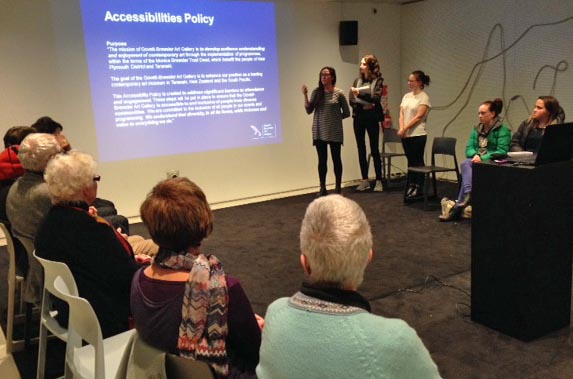 An accessibility policy is a framework that helps an organisation sustain, embed and develop its accessibility work. It sets out why accessibility matters, what the organisation is committed to, and how those commitments will be put into practice over time.
While Arts Access Aotearoa uses the term “accessibility policy”, you can also think of this as an accessibility framework, roadmap, or strategy. An accessibility policy might include guiding principles and values, alongside an action plan identifying what will happen, when, and who is responsible.
Shouldn’t accessibility be in all policies? Well, sort of. While accessibility has a place in everything, from your business plan to your marketing strategy to health and safety, it’s helpful to specifically name accessibility for Deaf and disabled people in a standalone document. Broad commitments to “everyone” or “diverse communities” can unintentionally make Deaf and disabled people invisible. Naming the communities an organisation wants to reach creates clearer, more meaningful commitments.
How to begin
 Start with what you already have. Every organisation that connects with people has some accessibility practices, even if you don’t name it as accessibility.
Look at your existing programmes, buildings, websites, communications and events. What already helps people engage? How to people get in, get involved, and experience your mahi? What feedback have you received? What would you like to do better?
This reflection can become the foundation of your policy. You do not need to have everything figured out before you begin. With your destination in mind, the journey can take shape over time. Accessibility policies are designed to grow: organisations can set priorities, take action, review and reflect, and develop further.
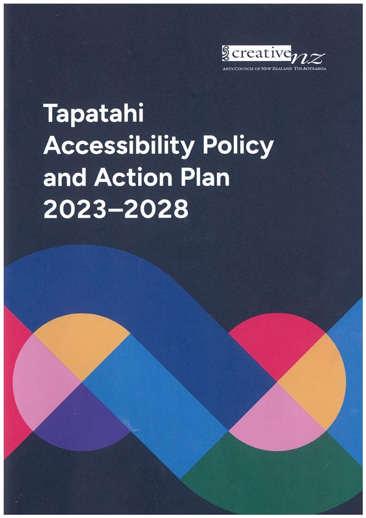
Creative New Zealand’s Tapatahi Accessibility Policy and Action Plan 2023–2028 is a useful example. Developed with Deaf and disabled artists and disability advocates, it connects values and principles with practical commitments and actions.
Does it cost money?
Not necessarily. Developing a policy can begin with time, reflection, research and conversations. Surveys and informal feedback can also help organisations understand what matters to their communities.
Where funding is available, it can make policy development stronger. Organisations might pay Deaf and disabled people for their expertise, establish an accessibility reference group, or create accessible versions of their policy.
An accessibility legacy
A policy creates continuity. People change roles, priorities shift, and funding fluctuates. Without a framework, accessibility can rise and fall. This can erode trust and resources without moving toward your long-term goals.
A good policy creates a gentle upward path. Progress might level off and hold steady in tough times, but the organisation has a shared commitment to avoid slipping backwards. Over time, small actions can build into lasting organisational change.
Accessibility will never be perfect right away. What matters is increasing the baseline, listening to feedback and being transparent about what is available. Feedback, including complaints, can be valuable evidence that people are engaging and identifying where barriers remain.
An accessibility policy is a promise of direction and accountability. It helps organisations move from occasional access initiatives towards accessibility as part of everyday practice, building consistency, relationships and trust along the way.
Stace Robertson, Lead Accessibility Advisor for Arts Access Aotearoa, can support you in developing your accessibility policy.
Get in touch with Stace at stace.robertson@artsaccess.org.nz or call 04 802 4349.
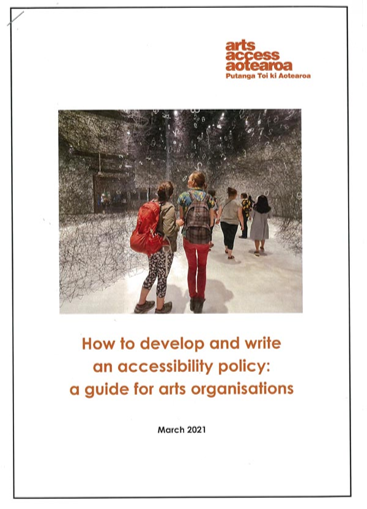
To learn more about developing and writing and accessibility policy, read our accessibility policy guide for arts organisations.
Read the latest from the Arts For All network
Discover our latest news and stories from the Arts For All Network, communities, events and advisor.
... loading ...