
 Arts Access Aotearoa
It’s taken me a while to work out what I wanted to say about Singapore. I came home from my professional exchange there with photographs, observations and plenty of ideas about accessible transport, buildings and attractions but whenever I tried to write about them, something was missing.
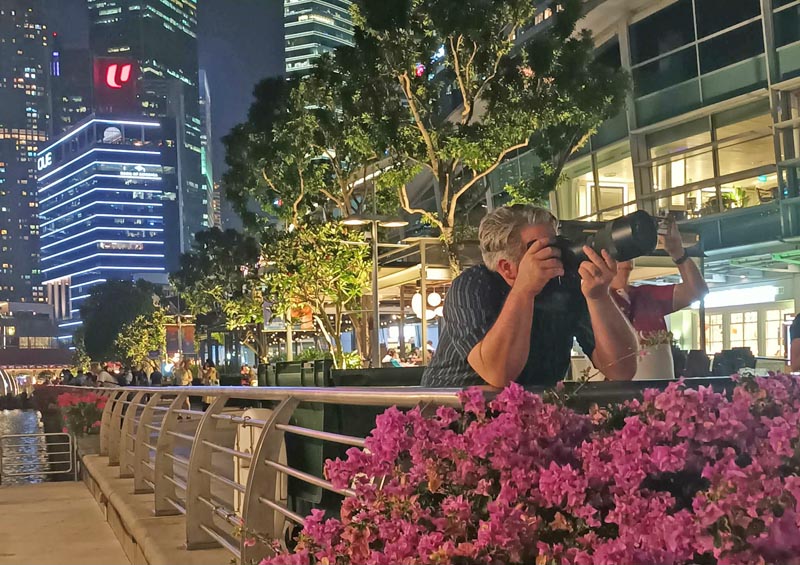 Those things matter but they’re not what stayed with me most strongly. What stayed with me was a feeling I found difficult to name at first: moving through a place in which my presence seemed to have been anticipated.
As a disabled person, I’m used to thinking about how I will get somewhere before I can think about where I’m going. A journey involves routes, lifts, surfaces, distances and the practical details that can make movement easier or harder.
In a wheelchair, even a simple journey can require a lot of attention. You learn the terrain, work out the options and keep part of your mind on what comes next.
In Singapore, something changed. At Changi Airport, the accessible route was often simply the route. On the Mass Rapid Transit (MRT), lifts were easy to find, information was consistent and tactile guidance paths helped me navigate large stations.
"My eyes were up off the ground more often"
Once I understood the logic of one station, I could carry that knowledge into another. I began travelling independently through the city and my attention shifted. My eyes were up off the ground more often.
 That meant I noticed the gardens, the architecture, the people, the public art and the changing character of different neighbourhoods. At Bird Paradise, I could concentrate on the birds, the landscape and my photography. I had the space to be curious about where I was.
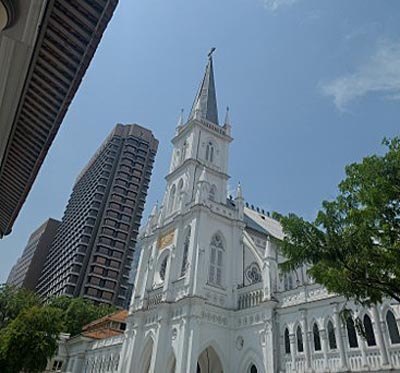
I noticed the same feeling in smaller moments. At CHIJMES, where I attended a performance by the New Zealand Secondary Students’ Choir, a portable ramp was positioned over the steps into the former convent chapel. It was lightweight but strong and could be moved when it wasn’t needed.
During the intermission, I went outside through the accessible entrance. When I returned, staff were already there. They knew someone had gone out that way and understood that someone would need to come back. Nobody made a ceremony of helping me. Someone had simply noticed.
In a café, I noticed something else that stopped me in my tracks. The accessible toilet had a mirror fixed to the wall on a horizontal axle so it could be tilted down and used from a seated position. It was such a small detail but I was shocked and also grateful that someone had thought about it. That someone had considered what I would actually see.
Singapore University of Social Sciences' invitation
That same thoughtfulness ran throughout the visit. The staff at the Singapore University of Social Sciences had invited me to Singapore to speak about the work we do at Arts Access Aotearoa, and they gave generously of their time to help us understand the city and the work happening there.
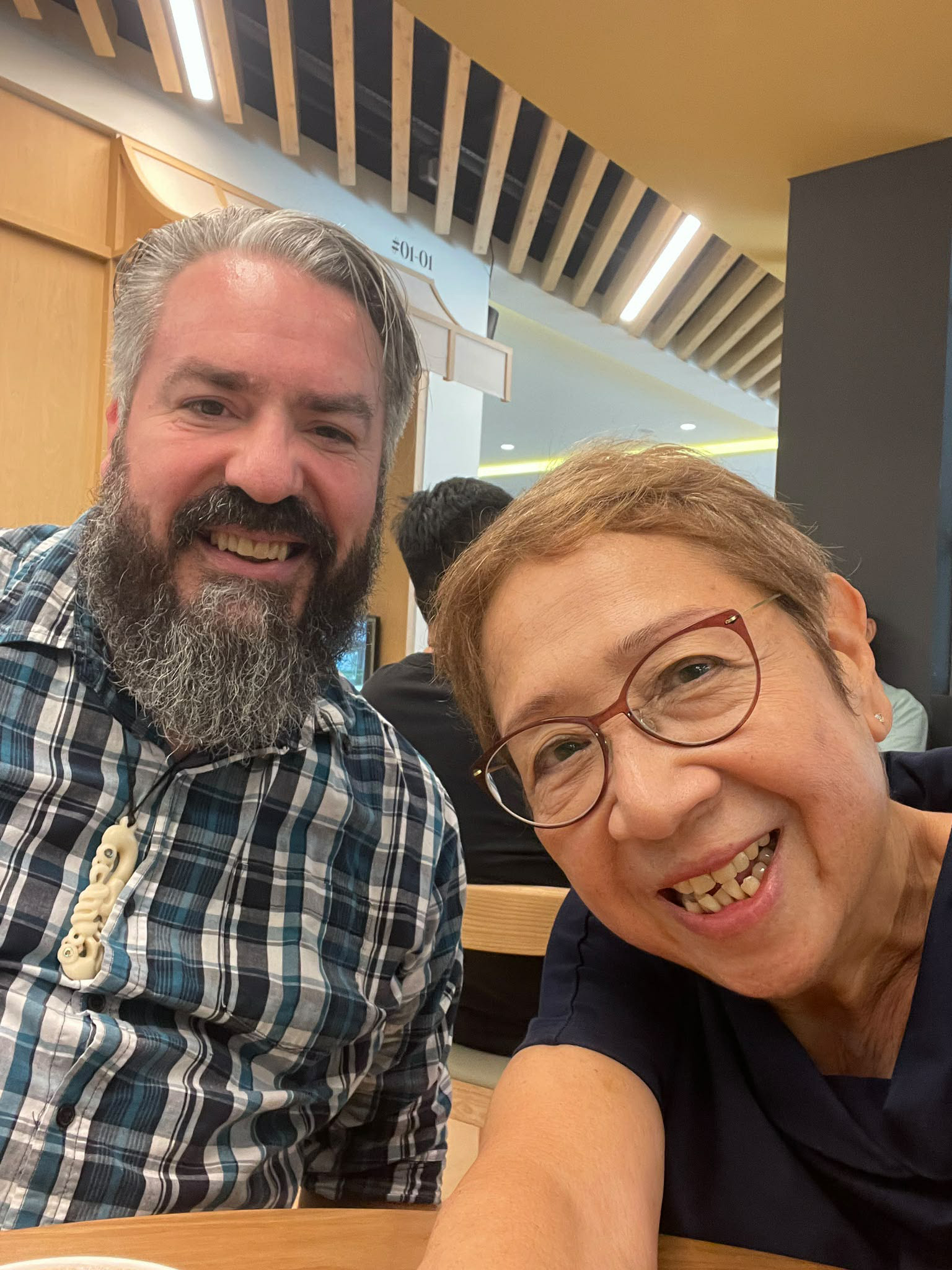 Theatre practitioner Peggy Ferroa shared her knowledge of Singapore and its arts and justice landscape, extending our conversations well beyond the formal programme. Meals, conversations and shared journeys became part of the professional exchange. Hospitality created time and space for people to connect.
At some point I began photographing a group of illustrated characters appearing on posters throughout the transport system. They encouraged small acts of consideration: giving way, allowing passengers to leave before boarding, offering priority seats and keeping spaces clear.
The words "The Thoughtful Bunch" appeared alongside them. As the week went on, I began to see that thoughtfulness was not just an idea represented on a poster. I had been encountering it throughout the city.
I have found myself carrying that experience back into my own work in arts and justice. Much of my work involves supporting creative practice in prisons, and I keep thinking about what it means to expect someone before they arrive. Has the practitioner considered the cultural and relational context of the people they are meeting? Have they thought about literacy, trauma, disability, shame and the courage it can take to share creative work? Have they made room for the knowledge a participant already carries? What might change if the person entering the room has already been imagined as one of the people the work is for?
These are questions I want to share with the practitioners and organisations I work with. Singapore gave me a lived experience of how small, thoughtful decisions can accumulate. Each decision may be modest but together they shape how a person experiences a place.
The memory of looking up
What I brought home was not a list of accessible features. It was the memory of looking up.
I remember the gardens, the birds, the stations, the architecture and the people. I remember having more of my attention available for the journey itself. I remember the staff member waiting at the door because they knew I would be coming back. I remember the mirror that tilted towards me, and my surge of gratitude when I realised someone had thought about what I might need before I arrived.
For one week, I was far from home and moving through a city I didn’t know. Yet I felt received. I felt there was room for me in the ordinary life of the place.
Coming to Singapore, I found civic manaakitanga.

Read more arts and justice stories
Read news and stories from the Arts and Justice programme, network, communities, events and advisor.
... loading ...