 Arts Access Aotearoa
I used to work in Parliament. Not as an MP. As a researcher – the person who finds the evidence, frames the argument, and hands it to the person who gets to stand up and say it.
 I loved the work. But I noticed something that took me a while to name. The debates about disability – about employment, transport, housing, income support – were almost always held by people who had never experienced any of it.
Not out of bad faith. Most of them genuinely wanted to get it right. But there's a specific kind of not-knowing that comes from legislating a life you've never had to navigate.
You can read every report ever written about accessible public transport. But if you've never missed a job interview because your bus had no ramp, you're solving a puzzle. Not living one.
Arts Access Aotearoa exists to ensure disabled people can access and participate in the arts — not as an afterthought but as a right. Its work across creative spaces, the Arts For All Network and Taha Hotu Deaf and Disabled Artists Initiative is premised on something simple and radical: that Deaf and disabled New Zealanders deserve to be present, visible and heard in the cultural life of their country.
The same argument in a different room
That's not separate from the argument I make above. It is the same argument in a different room.
The arts are one of the places where the gap this blog describes can begin to close. When disabled artists are supported, when venues are accessible, when creative spaces remain open to the people who need them most, something shifts in who gets to tell their own story — and whose experience is treated as worth telling.
Parliament reflects who it contains and so does culture. Arts Access Aotearoa is working to make sure that reflection is inclusive and accessible.
Here's the number that stays with me. Around 18% of New Zealanders live with a disability or long-term health condition.
Disabled MPs in the House
Last term, disabled MPs made up somewhere between 2 and 5% of the House — and that's using generous definitions, counting people who disclosed publicly or were visible in some way.
So we have nearly 20% of the population making up a fraction of the lawmakers. That's not a gap. That's a chasm.
Now, I want to be careful here. Because the usual response to this is: "We need more disabled MPs." And that's true. But it's also incomplete.
Experience that shapes how the room thinks
Representation isn't just about who's in the room. It's about whose experience shapes how the room thinks.
You can have a disabled MP who votes against accessible housing because their party tells them to.
You can have a non-disabled MP who fights harder for disability employment policy than anyone else in the building.
The goal isn't a symbolic headcount. The goal is a parliament where disability experience is so present – in the research, in the submissions, in the lived knowledge of enough members – that you can't design policy in ignorance of it.
We're nowhere near that. What we have instead is a system where Deaf and disabled people are consulted late, counted rarely, and thanked warmly for their input before the decision that was already made gets announced.
I've sat in those rooms. On the council side, on the advisory group side, on the submission side. The consultation is often genuine. The power to change the outcome based on it often is not.
The deepest problem isn't that Parliament doesn't care about disability. It's that Parliament doesn't know what it doesn't know.
Inheriting invisible gaps
When the people designing the system have never depended on it, the gaps are invisible to them. Not malicious. Invisible.
And invisible gaps don't get fixed. They get inherited.
That's how you get a Total Mobility Scheme that hasn't kept up with costs. A benefit system that punishes part-time work. Job ads that screen out disabled applicants before a human ever reads them.
Not cruelty. Institutional ableism.
I don't think the fix is simple.
What disability representation actually means
But I think it starts with being honest about what representation actually means and what it costs when it's absent.
It means having disabled people in the room when policy is being designed, not when it's being announced.
It means research informed by people who have navigated the system, not just studied it.
It means a parliament that reflects the country it governs – not just its educational, professional and demographic majority.
I'm genuinely curious about this and so I'll ask it directly. If you've engaged with Parliament – as a submitter, an advocate – what did representation actually look like in practice? Not in the press release but in the room.
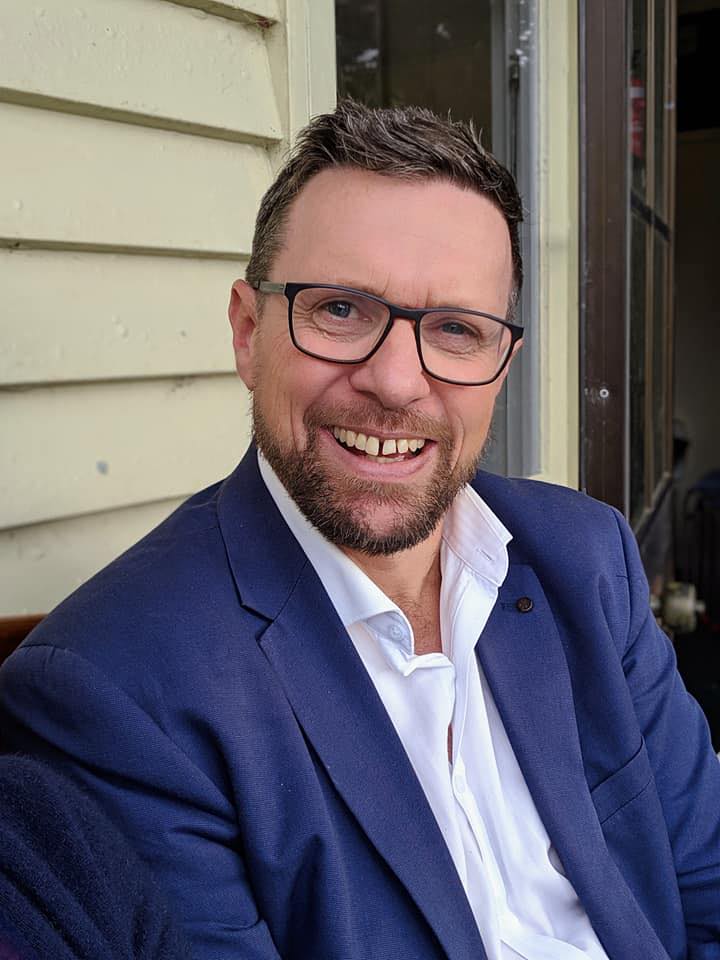
Nick Ruane is a former DPA National Executive Council member and Co-Chair of the Wellington City Council Accessibility Advisory Group (2016–2023), Nick brings deep experience in disabled people's leadership and governance. He lives with both a physical and an invisible disability.