 Arts Access Aotearoa
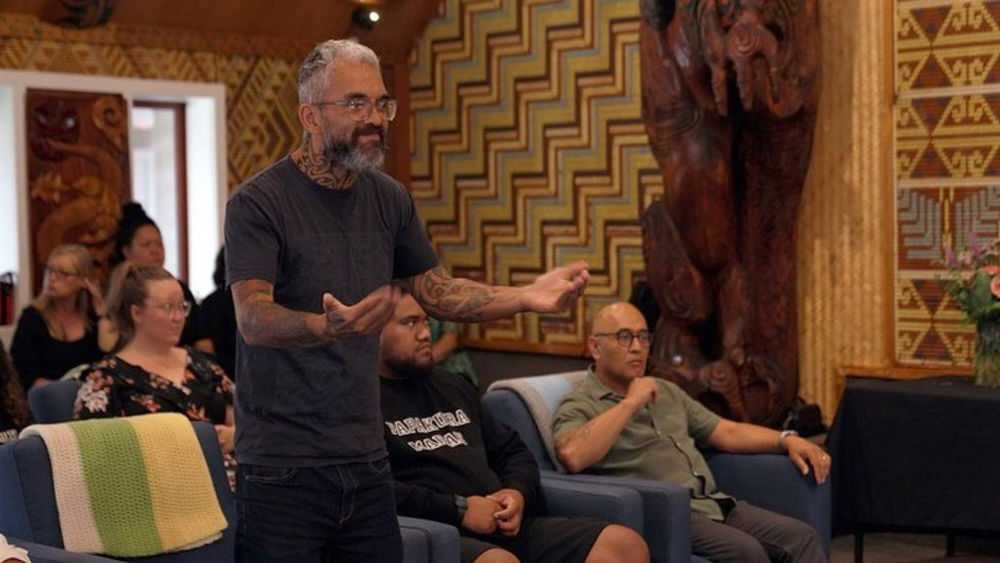
"Being Turi" Māori filmmaker Jared Flitcroft is the recipient of the Whakahoa Kaitoi Whanaketanga Creative New Zealand Deaf and Disabled Artists Fellowship 2026, presented by Arts Access Aotearoa. Based in Te Whanganui-a-Tara Wellington, Flitcroft (Ngāti Maniapoto) is a writer, actor, director and award-winning filmmaker.
Fluent in NZSL, te reo Māori sign language concepts and English, he is a passionate advocate for authentic, inclusive and accessible storytelling. His work focuses on expanding how Deaf stories are told on screen, with an emphasis on visual language, creative expression and Deaf-led filmmaking practice.
He will use the fellowship to research and explore New Zealand Sign Language as a cinematic language in film.
Hi Jared! Congrats on receiving the fellowship. What did it mean to you when you found out you’d been selected?
I felt really grateful and honestly quite humbled. Opportunities like this don’t come around often, especially for Deaf artists. It felt like a real vote of confidence in my work and in the direction I want to take my filmmaking. It also gave me a sense that there is space for Deaf-led storytelling to grow in Aotearoa.
Your fellowship research explores NZ Sign Language as a cinematic language, what does that shift look like in practice?
For me, the shift is about moving away from thinking of NZSL as something that needs to be translated for the screen, and instead treating it as the foundation of the storytelling itself. In practice, that means designing scenes where rhythm, tension and emotion come from the visual language of NZSL, through movement, timing, eye gaze, and spatial relationships, rather than relying on spoken dialogue or sound.
It also means making creative decisions from a Deaf perspective first, where meaning is carried visually and through interaction in space, rather than being adapted from a hearing-centred structure.
How does that way of seeing shape the way you frame scenes or direct performers?
My storytelling comes from a visual place. I pay close attention to how people use space, how they move, where they look, and what is happening in the silence between interactions. That shapes how I frame scenes, sometimes holding wider shots to let the full interaction play out visually, or moving closer to focus on expression and detail when emotion becomes more internal.
Directing performers becomes about clarity of intention, timing, and how meaning is communicated visually rather than verbally.
Your work bridges te ao Māori, Deaf culture and film. How do those different worlds inform your creative process?
Te ao Māori, Deaf culture and film all inform each other in my work. There are shared values around connection, presence, and ways of understanding the world that are not always verbal.
Te ao Māori grounds the work in identity, whakapapa and tikanga, while Deaf culture shapes how story is communicated visually and through shared understanding in space. Film becomes the meeting point where these ways of seeing and communicating can come together.
You’ve said your long-term ambition is to lead a feature film grounded in NZSL and a Deaf world view. What excites you most about the possibilities that could open up for cinema in Aotearoa?
A film grounded in NZSL and a Deaf worldview would not just be different in language, but in structure, pacing and perspective. It opens up new ways of telling stories that are visually driven and that allow audiences to experience narrative in a different way.
It could also offer audiences a more immersive experience, inviting them to engage with story from a Deaf perspective rather than simply observing Deafness as a character trait. Instead, Deaf ways of seeing and communicating become central to how the story is told and understood.
Finally, what's something not many people know about you?
I’m a three-time Wellington Deaf Poker Champion.
Thanks to The Post for permission to post this story on our website.