
 Arts Access Aotearoa
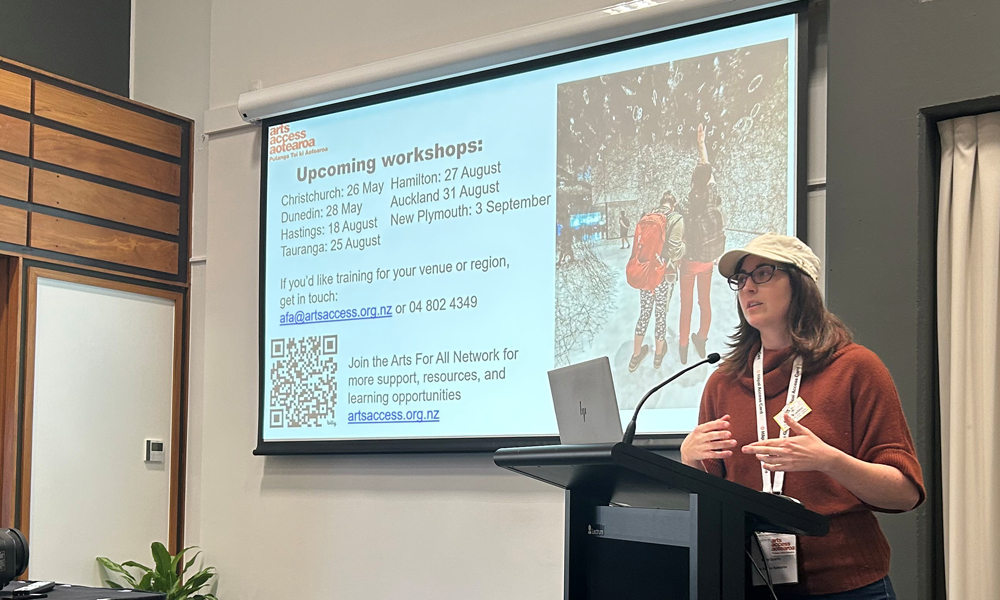
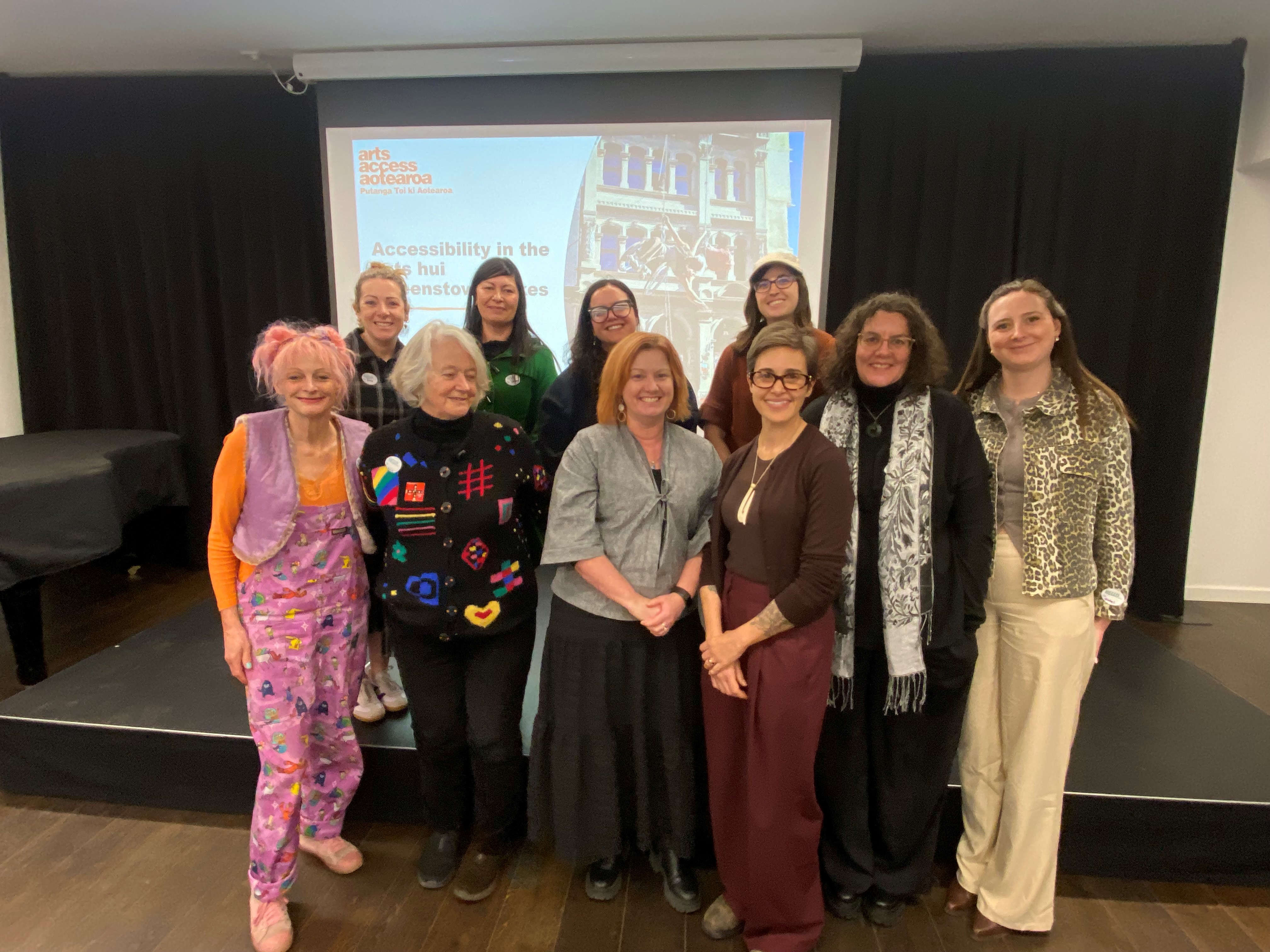 Arts Access Aotearoa’s Arts For All Activator, Katie Querin, has been travelling around Te Waipounamu delivering Front-of-House Accessibility Training workshops. We caught up with her after sessions in Christchurch and Dunedin, and an arts accessibility hui in Queenstown, to hear what she's been learning on the road.
The workshops bring together venue staff, volunteers, arts organisations and anyone working in audience-facing roles to build confidence in welcoming Deaf and disabled visitors and audiences.
Why focus on front of house accessibility?
Front of house teams have a huge impact on whether someone feels welcome in a space. Accessibility isn't only about ramps, lifts or accessible toilets; it's about people.
Many front of house staff are already doing accessibility work without necessarily calling it that. Their role is to help people engage with the arts safely, comfortably and with dignity.
Our Front-of-House training is about building confidence and practical tools so staff can respond respectfully, offer support in a mana-enhancing way, and navigate situations as they arise.
What were some of the key themes that emerged in Christchurch and Dunedin?
A key theme in Christchurch and Dunedin was shifting the focus from understanding disability to increasing accessibility. Thinking first about removing barriers, rather than knowing about every impairment, gives people a solid base to build from without feeling overwhelmed by information.
In both regions, we had Arts For All Network members from a range of different arts organisations attend each training, and the ability to collaborate, learn and connect with each other was hugely positive. It was great to see people comparing ideas, sharing challenges and solutions, and learning from one another.
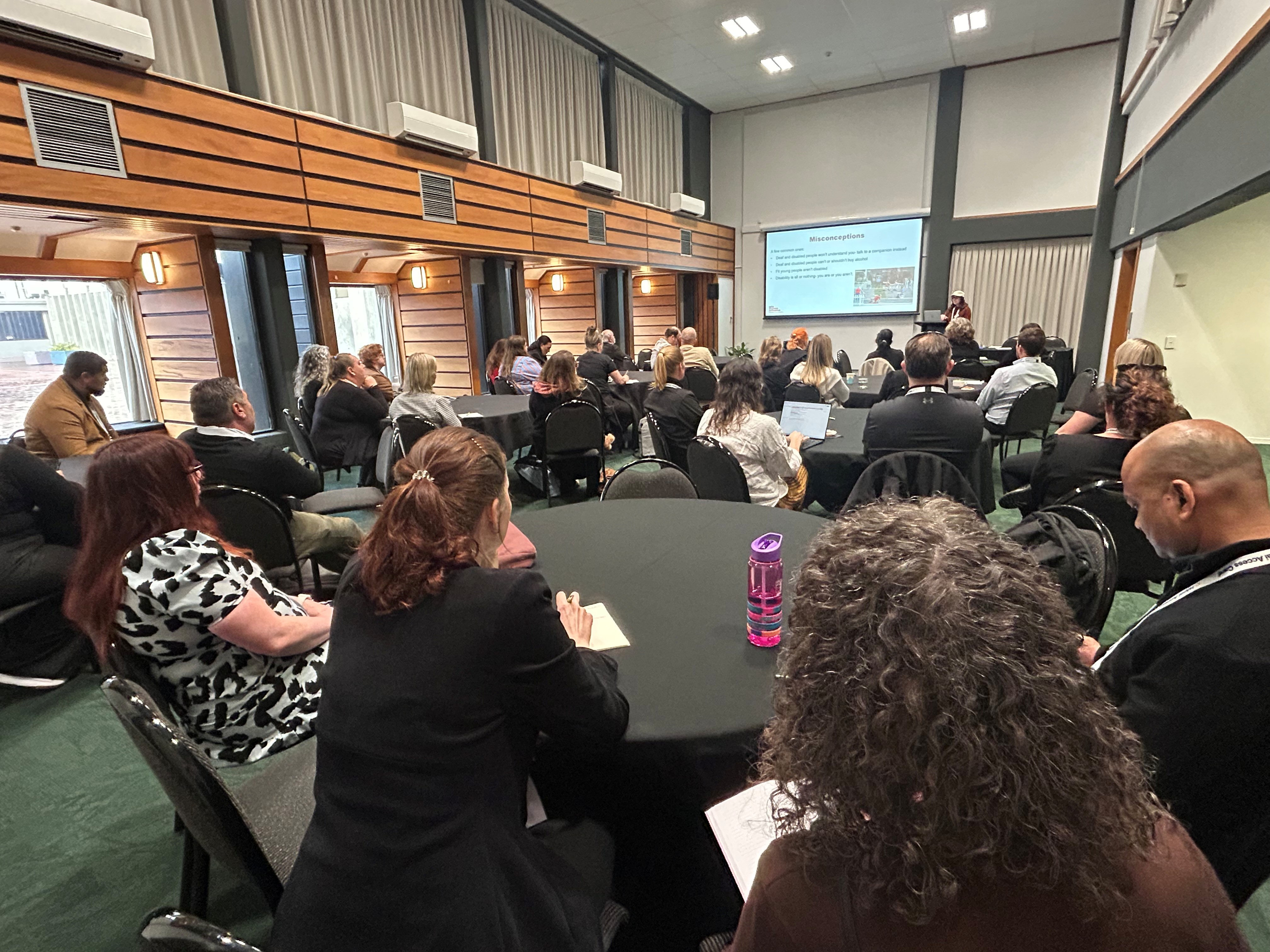 The biggest challenge most people spoke about was lack of knowledge: not knowing the right words to use, not sure of what solutions existed, not understanding how a situation could be improved. It was wonderful to see the knowledge and confidence growing right there in the room.
In the training sessions, we use real-world scenarios drawn from theatre practice and lived experience to move from theory into action. This allows us to have authentic discussions where we can compare ideal responses with how situations actually play out.
Working through these situations helps people build confidence before they encounter them in real life.
We also work through situations that front of house teams might encounter, for example, supporting someone who has booked a seat that isn't accessible for them, communicating with someone who uses alternative forms of communication, or responding when another patron complains about a disabled person's presence.
Those situations can feel daunting. Several participants reported having been in similar situations and remember feeling uncomfortable about not being fully prepared to respond in a mana-enhancing way.
Having the opportunity to talk them through in a supportive environment helps people build confidence before they face them again in a real-world setting.
The goal isn't to memorise the perfect response but to develop confidence, flexibility and a willingness to problem-solve alongside people. Every conversation and scenario helps fill the kete with knowledge.
"I hope people leave feeling confident that they can remove barriers, increase access, and make someone’s experience better without knowing everything about accessibility. Accessibility isn't about perfection; it's about creating environments where more people can participate."
Were there any moments from the workshops that stayed with you?
 In Christchurch, we had a lively discussion about welcoming service dogs into venues. It highlighted ongoing confusion about access rights and identification, including where service dogs are permitted (by law, all public spaces), and how to recognise certified service dogs.
We talked through what questions are appropriate to ask, what aren’t, and the harm that can come when disabled people are approached from a place of doubt rather than trust. The discussion helped identify opportunities to make sure front of house teams have the right information and confidence to welcome service dog users.
This discussion stuck with me because it was a great example of people rethinking assumptions, deepening their understanding, and taking practical steps to creating more welcoming spaces.
What's next?
Feedback from participants highlighted a strong appetite for further support – from website accessibility and ticketing, through to organisational confidence.
The Arts For All Network supports ongoing learning, shared ideas and problem-solving across the sector. With this training, we aim to spark action and discussion.
Although the training focuses on front of house accessibility for performing arts organisations, several people from the GLAM sector (galleries, libraries, archives and museums) attended and saw clear applications in their own work.
There’s a strong appetite for learning and I’d love to keep hearing what people are wanting to tackle next. Asking questions about accessibility can feel confronting because the answers may reveal gaps in our systems, processes or priorities. But that’s where change begins.
Read the latest from the Arts For All network
Discover our latest news and stories from the Arts For All Network, communities, events and advisor.
... loading ...
[-CB-110888-Enquire about Arts Access Aotearoa training-]