 Arts Access Aotearoa
Arts Access Aotearoa is marking its 30th anniversary this year and the 14th year of the Arts For All Network. Born out of the creation of the Arts For All guide, the Network now has more than 1,100 members and provides regular opportunities for in-person and online connection for those working to make the arts more accessible to Deaf and disabled people as artists and audiences.
 sm.jpg "NZSL interpreter Kelly Hodgkins, onstage for the Tim Bray Theatre Company's production of Greedy Cat") Accessibility in the arts has come a long way, in huge part due to the dedication and hard work of Arts For All Network members. Iona McNaughton, Communications Advisor at Arts Access Aotearoa, says that when she started working for the organisation in 2009, Tim Bray Theatre Company was the only organisation offering accessible events.
Accessibility in the arts has come a long way, in huge part due to the dedication and hard work of Arts For All Network members. Iona McNaughton, Communications Advisor at Arts Access Aotearoa, says that when she started working for the organisation in 2009, Tim Bray Theatre Company was the only organisation offering accessible events.
"Otherwise, there was nothing. In 2010, a student of Toi Whakaari: New Zealand Drama School provided audio description for Bruce Mason’s iconic play, 'The Pohutakawa Tree'. I’m pretty sure this was the first audio described performance in New Zealand and it was really well-received by the blind community.
"Over the next 15 years, the desire to increase accessibility has gathered momentum among arts and cultural organisations to the point where there are now more than 1,000 Arts For All Network members. That’s extraordinary!”
While there is still a way to go, this celebrations page takes a moment to capture and commemorate some of the incredible arts accessibility mahi of the Arts For All Network members for 2025. It’s just one small snapshot of all that’s been happening, and we hope it can congratulate our dedicated members, and also inspire others to get excited for arts accessibility as we look ahead to 2026. Together, one idea, project or moment at a time, we are creating a more accessible arts world.
Museums and galleries
Wheako Pōneke Wellington created NZSL interpreted, captioned and narrated videos that guide visitors through the Cable Car Museum and Wellington Museum. These resources improved understanding and confidence broadly, with the wonderful discover that the impact goes well beyond the Deaf and hard of hearing community. The videos are proving valuable for a wide range of visitors, including those with access needs who benefit from visualising the spaces in advance, and anyone who appreciates more detailed information before entering a new environment.
 Auckland War Memorial Museum debuted its first NZSL and relaxed performances of "Night at Auckland Museum", an annual family event which takes place in the July and October school holidays. The relaxed performance took place on dress rehearsal night and included quiet nooks, reduced capacity, a pre-show demonstration and a welcoming, judgement-free atmosphere. The Museum worked with Platform Interpreting NZ and neurodivergent consultants to set up two stunning accessible events with great turnouts and feedback.
Auckland Art Gallery continued growing its NZSL gallery tours, led by Deaf artist Abbie Twiss, who is featured in Auckland Art Gallery’s NZSL information video. Engagement has been growing, with higher numbers of Deaf attendees visiting this year than ever before. They also provided audio described and blind/low vision accessible immersive explorations of their works and their interactive exhibition, Artland, which offered an opportunity for visitors to create art that would be featured in the gallery. Similarly, Govett-Brewster Art Gallery / Len-Lye Centre continued to offer popular sense art tours, to welcome visitors to experience exhibitions through audio descriptions and touch.
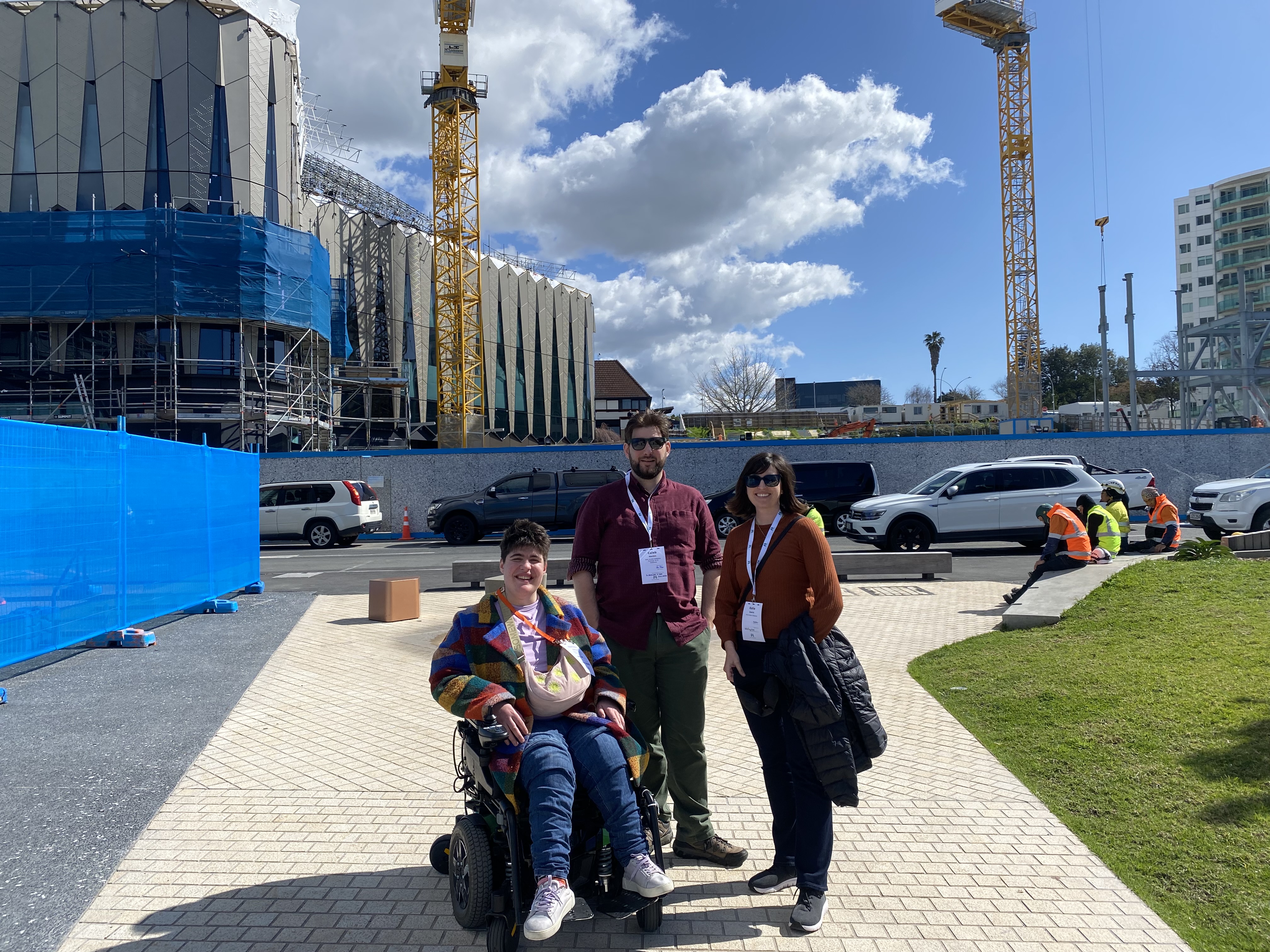 Te Whare Taonga o Tauranga Tauranga Museum and Te Unua Museum of Southland are both under construction and are already celebrating accessibility wins. Both museum teams have met with Arts Access Aotearoa this year to develop and support their accessibility goals. Tauranga Museum will feature in Te Manawataki o Te Papa, the new civic precinct in the heart of the city centre, alongside a library and community hub, and civic whare. Te Unua is committed to ongoing improvement to make sure everyone feels welcome in their space, and are talking to experts, adopting best practice and engaging with their community. Watch this space!
The biennial iNDx Art Exhibition returned to Tūhura Museum this year, showcasing the work of 44 autistic artists through exhibitions, artist talks and events. This popular exhibition grew out of a conversation at an Arts For All Otago Network hui several years ago and is a delightful example of the magic that can happen when Network members collaborate, share dreams and find ways to work toward a common goal.
Teece Museum is the joint first place winner of the UMAC award for 2025. The Teece was recognised for the Accessibility Project, which expanded efforts to diversify services and facilities for the Deaf and disabled community, starting with a full audit. When they started the Project in 2024, they hoped to prove that accessibility can be achieved with small meaningful changes that doesn’t cost the earth. They hope this project proves that even the smallest of museums can make steps towards becoming more accessible and inclusive. Congratulations, Teece Museum!
Te Papa continued strengthening its commitment to Deaf and disabled visitors. This year, the museum ran a consultation process with the Deaf community to guide the use of NZSL in its public programmes and on its website. As a direct result, Te Papa delivered three Deaf-led and NZSL-inclusive programmes, with more planned for 2026. To build internal capability, 18 public-facing kaimahi have been learning NZSL since January and have completed Level 1C. Staff also took part in Deaf awareness training to improve confidence and cultural understanding across the organisation. Looking ahead, Te Papa will begin a Turi Māori-focused consultation in early 2026.
And Te Whare Taonga o Waikato Waikato Museum finishes the year strong with an open house featuring a full day of programmes celebrating International Day of People with Disabilities.
Performing arts
Dozens of organisations offered hundreds of relaxed, audio described and NZSL interpreted performances throughout the year all over Aotearoa and showcased stunning Deaf and disabled talent on their stages, in concert halls and other venues. Many offered touch tours, pre-visit information, access tickets and countless other initiatives to make an evening out enjoying performing arts accessible to more Kiwis than ever before.
Hic Sunt Dracones in Ōtepoti Dunedin created a fully accessible pop-up venue for performance "The Neurospice Girls", supported by a visual story, chill-out spaces, relaxed performance elements, and ND-friendly pricing. Audience feedback was overwhelmingly positive.
Auckland Theatre Company provide relaxed performances for each of its performances in 2025, following its two pilot performances in 2024. While relaxed performances are commonly put on for children, these shows are aiming to make theatre more accessible to autistic and neurodivergent adults and adults with access requirements. Auckland Theatre Company has also been growing its Deaf audiences with the guidance of Deaf consultant Rachael Walker.
Physical and digital accessibility are both on the wins list for 2025. Basement Theatre was repainted to provide better visual accessibility around its theatre and has even more physical upgrades on the wish list for 2026. The team has been working hard behind the scenes and are excited for big things to come in the accessibility space soon.
He Waka Eke Noa Charitable Trust is tackling the digital space, with work in progress on updates and improvements to its website’s accessibility.

New Zealand Symphony Orchestra brought guide dogs and their trainers into the concert hall during an NZSO rehearsal. Featured on TVNZ 1’s Seven Sharp, this brought the orchestra into contact with a whole new community to create better access for blind and low vision orchestra attendees.
Royal New Zealand Ballet provided accessibility for all ages with audio description for "The Nutcracker" and relaxed performances with NZSL interpretation of children's ballets "Dazzlehands" and "The Ballet Zoo".
Baycourt Community and Arts Centre celebrates many facets of arts accessibility wins this year - from training and upskilling staff, adopting the Hidden Disabilities Sunflower programme, improving the accessibility of its website, and working toward an accessibility audit for its space. It's also collaborating with Tauranga City Council to add two new mobility parks outside its venue to double the number of accessible parks near Baycourt’s entrance.
The Court Theatre collaborated with Glass Ceiling Arts Collective to share their new accessible theatre space and soak in learnings from the Collective, who held two workshops on increasing accessibility for both artists and audiences.
Large and small, accessibility is coming to all
From independent, grassroots organisations to the big players, arts accessibility is a focus for many.
Anna Bailey of String Bean Puppets started development on a new show about neurodiversity and biodiversity. This included development workshops with neurodivergent kids to add their thoughts and experiences into the story to see themselves authentically reflected in the narrative. Anna also worked with an autistic script advisor and dramaturg on the project to grow the show from a place of authenticity and connection.
Independent improv company Improverished used "opt-out" lanyards to offer audience members the choice to participate, or not, with audience interaction, alongside detailed pre-show information, accessible performances, and high standards of artist accessibility for their neurodivergent team and performers.
On the large events side, World of Wearable Art had a record-breaking year for wheelchair accessible seats sold for this year’s show. They continued with last year’s initiative to have the awards ceremony night NZSL interpreted, and launched a new audio guide, which gave audience information and insight into materials and work behind WOW’s wild costumes. While not the same as audio description, the team hopes to continue to build on the audio guide’s potential to increase accessibility to many attending this iconic event, including the blind and low vision community.
Spark Arena had their highest-ever number of audio described and NZSL interpreted performances. They also focused on training and upskilling for staff, to provide the best welcome to Deaf and disabled audiences. With accessibility ambitions as big as their arena, the Spark team is full of plans for next year and beyond.
Accessibility service providers
Accessibility service providers are key to supporting better access to the arts world for Deaf and disabled people. They play a huge role in making the arts more accessible, and we applaud their wonderful mahi.
It’s been a huge year for Platform Interpreting New Zealand. Platform provided interpretation for 90+ events in eight regions and online, and across eight languages. 2025 was filled with accessible cabarets, family events, comedy, theatre, dance and musicals, music concerts and festivals, museum and gallery tours, film festivals, circuses, poetry events, major touring shows and author talks: check out Platform’s past events for all the details.
A huge shout-out to Mary Schnackenburg, an Auckland-based arts lover and director of Accessible Information and Communications Limited. Mary gives hours of her time to craft her legendary email newsletter of audio described and blind/low vision accessible shows, festivals, gallery tours and more, help ensure the information reaches her community. Thank you, Mary!
It's been a big year for Make it Easy. Highlights have been working on Easy Read translations for Toi Pōneke and Creative New Zealand, plus Taha Hotu resources for Arts Access Aotearoa. Several translators are also arts practitioners and know from experience how useful guides to things like preparing an artist CV or making a project budget are.
Audio Described Aotearoa has been increasing access to the arts for blind and low vision people for over ten years, and 2025 saw them describing everything from Cirque du Soleil to outdoor festivals to theatre shows and more. Leading the way with cutting edge technology like Braille surtitles at the opera and multilingual descriptions for major events, Audio Described Aotearoa is changing the game on access across the motu.
New provider Access Maps continued its mission to bring clarity, confidence and trust in accessibility information to communities across Aotearoa. A key part of this work is partnership with arts venues including the team at Baycourt Community and Arts Centre. Baycourt’s Access Page powered by Access Maps, has supported visitors, performers and staff by providing clear and accurate information well before they arrive.
Felicity Hamill, accessibility coordinator for film, celebrates the Sight Unseen web series from Able which won the NZ Web Fest in the Webseries NZ Factual Series category for 'Best Concept'. Episode 1 (featuring skier Thomas Coysh) won Best International Doco at the Australian Focus on Ability Film Festival, and closer to home the entire web series has been picked up by RNZ.
Festivals
Festivals across Aotearoa celebrate having Deaf and disabled artists and accessible performances on their stages in 2025, including Auckland Arts Festival, New Zealand Fringe Festival, Nelson Arts Festival, We The Young Festival, Midwinter Carnival and more.
Auckland Arts Festival 2025 had its biggest Accessible Programme yet. Disabled-led Personal, Jodee Mundy’s bilingual Auslan/English story of growing up in a Deaf family, drew the festival’s largest-ever Deaf audiences. 2026 includes accessible programming and another outstanding disabled-led work, Music Portrait of a Humble Disabled Samoan, where musician and disability advocate Pati Umaga tells his own story alongside a cast of wheelchair users.
To support their 2026 artists, and further their commitment to prioritising accessibility, New Zealand Fringe Festival partnered with Arts Access Aotearoa for an independent artists accessibility workshop now available in accessible formats as a resource to all.
Dunedin Fringe Festival, sponsored by That Blind Woman Julie Woods, debuted the Most Accessible Event Award. This award incentivised and celebrated accessibility being prioritised in performances, and was shared by two wonderful performances, ASMR Hour and The Tiny Show.
Arts in the outdoors was more accessible than ever this year
CubaDupa, Wellington’s iconic free street festival, provided NZSL interpreters on their stages for the first time. Check out CubaDupa’s audio-visual map to learn about what was available this year. Gardens Magic in Wellington launched a relaxed concert programme and the team has dived into creating welcome videos for Wellington City Council outdoor arts events.
Wellington Pride Parade launched their groundbreaking accessibility programme, developed in true partnership with Deaf and disabled community. They offered low noise, low crowd, seated and wheelchair accessible spaces and viewing areas, NZSL interpreters, a mobility bus, accessible information and more, to welcome many first-time parade visitors whose access needs are finally being met.
New Plymouth’s TSB Festival of Lights worked with their local Deaf and disabled community to improve and expand their accessible offerings, offering their first-ever relaxed preview evening for the Winter Pop Up edition of the festival and expanding their summer accessibility evening. For 2025/2026 they will offer three evenings specifically designed for accessibility, including a first-time addition of a relaxed evening post-Festival.
TwoMinds Festival in Christchurch also made a splash introducing their accessibility programme, which included an access hub, an event accessibility handbook, and a huge uptake among Deaf and disabled music festival attendees. A small team and slim budget couldn’t stop TwoMinds’ commitment to accessibility.
Conferences also upped their accessibility game this year
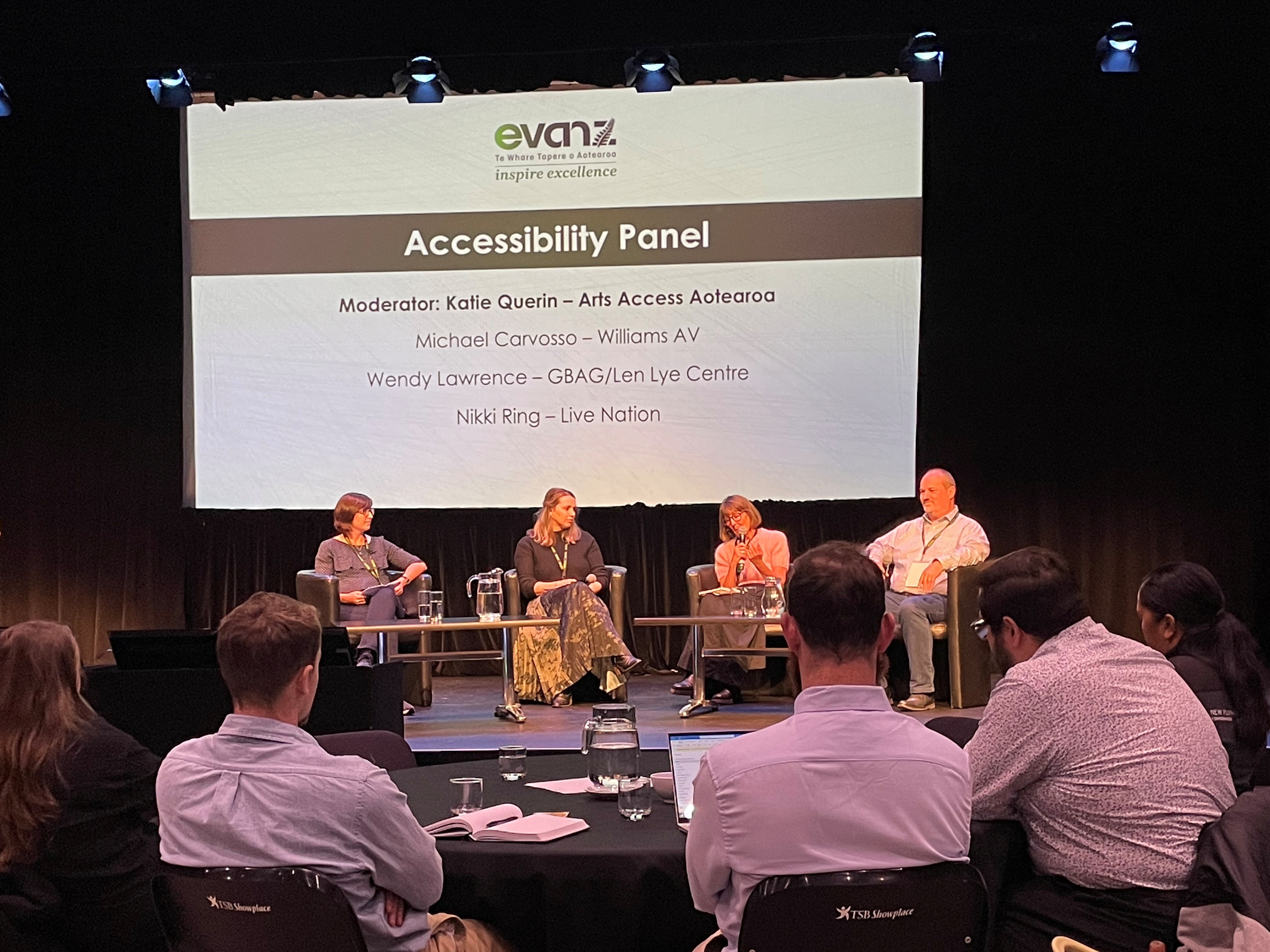 EVANZ (Entertainment Venues Association Of New Zealand) and ETNZ (Entertainment Technologies New Zealand Inc) platformed accessibility in their conferences, connecting with Arts Access Aotearoa provide accessibility panel sessions for attendees. Nui Te Kōrero, Creative New Zealand’s biennial conference, and PANNZ (Performing Arts Network New Zealand) Arts Market both engaged accessibility advisors and worked with many Deaf and disabled artists and creatives to embed equity and accessibility into the events, speakers and programmes.
Let’s get together
Many Arts For All Network organisations are finding strength in numbers and forming or continuing groups focusing specifically on arts accessibility.
The Wellington Libraries accessibility champions group met regularly through 2025 to work toward accessibility collectively, by sharing knowledge and ideas between library branches. Te Matapihi Central Library in Wellington, soon to open in 2026, also opened its doors for some sneak preview visits to show off its new accessible community arts spaces, and make connections with accessibility-focused creatives.
Building off the momentum of the regional Arts For All Taranaki Network hui this year, Creative Taranaki launched Accessible Arts Taranaki, a locally focused discussion group for Taranaki residents to set goals for arts accessibility at the regional level. Sessions are planned for 2026 to build on this year’s well-attended discovery sessions and keep the mahi going.
Auckland Theatre Company provided two front of house accessibility trainings. One session, developed by Arts Access Aotearoa, invited theatres from across Auckland to explore general accessibility for audiences in a collaborative, scenario driven training. Front of house staff shared that the trainings gave them skills they could put into action right away, gained tools for mana-enhancing interactions with Deaf and disabled audiences and connected across organisations to explore setting collective accessibility goals.
Toitoi Hawke’s Bay Arts and Events Centre’s ABIDE group (Accessibility, Belonging, Inclusivity, Diversity and Equity) held monthly meetings to keep their accessibility kaupapa on track. Among the many initiatives were the introduction of Language Badges, to indicate languages spoken by bilingual staff, including New Zealand Sign Language; free companion tickets for wheelchair accessible seat bookings; and hosting a range of events from community groups, including disabled-led and focused groups. The group also created a pathway for access requests from ticketholders and offer ear defenders, core boards and zen zone options, which helps Toitoi be better hosts to all patrons.
That’s a wrap
This blog could keep going on and on; there’s been so much excellent arts accessibility mahi this year. As we approach the end of 2025, it’s been wonderful to take a moment for reflection and celebration of how far arts accessibility has come.
The Arts For All Network theme for this year was: small changes over time can have a big impact. This page captures just a small slice of that collective action and shows what a rich and diverse arts accessibility landscape we are building together in Aotearoa. There is still far to go, and there are still many barriers to improving accessibility. We know there is still much room for improvement in this space, even among the individuals and organisations sharing celebrations here. No organisation, event or individual is perfect, and that’s not what this page is about. The purpose of this celebration page is to pause on this journey and take a moment to say, “Together we are making a difference, and we have come a long way.” Smile, celebrate, do a little dance- and then let’s keep going.
As we wind down this year and gear up for the next, I think ahead to what the next 12 months might bring. How far can arts accessibility go if everything we’ve done can keep growing and building for another year? If we strive to lock in and grow gains, deepen connections, continue learning, take feedback and strive always for better now rather than waiting for perfect later, what might the arts world look like in the next 2026 celebration page?
It has been an honour and a privilege to work alongside the Arts For All Network this year. A huge thank you and congratulations to everyone who has been part of this journey, and who are still moving along the path toward a more equitable world.
Didn’t get an opportunity to contribute to the celebration page? Fill out the annual Arts For All Network survey. It’s your opportunity to share your wins, barriers, goals and dreams, and set the direction of the Arts For All Network for 2026.
Want to join the Arts For All Network? Sign up by completing this form, emailing afa@artsaccess.org.nz or calling 04 402 4349.