 Arts Access Aotearoa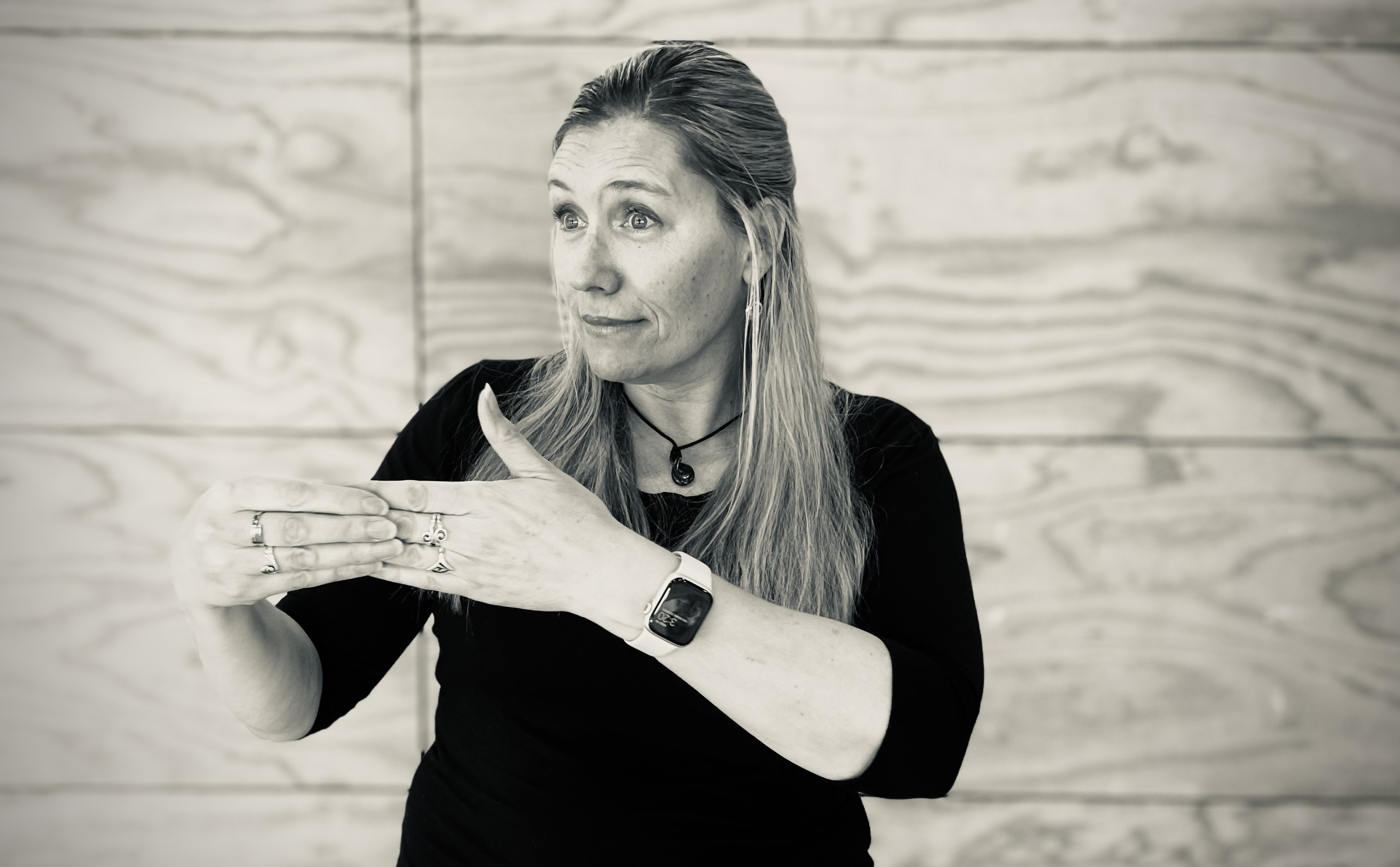
The Arts For All Network’s Deaf and disabled artist Q&A series gives members the opportunity to ask questions directly to Deaf and disabled people, helping shape more accessible arts experiences across Aotearoa.
We recently invited questions for Rāhera Turner, a Turi Māori (Māori Deaf) NZSL Creative Consultant and Deaf Consultant. Her responses offered practical guidance, challenged assumptions, and reinforced the importance of working in partnership with Deaf communities.
What followed were a number of clear themes that came through across the discussion.
Be led by Deaf people
One of Rāhera’s strongest messages was about where Deaf leadership sits in accessibility work.
NZSL interpreters play an essential role in supporting communication, but they are not a substitute for Deaf lived experience, cultural knowledge or community perspective.
“Deaf consultants should be the primary relationship holders. Interpreters support that work, not replace it,” says Rāhera.
When developing work for Deaf audiences, Deaf consultants should be involved from the beginning, not brought in after decisions have already been made. Accessibility is strongest when the people affected by those decisions are part of making them. In short, nothing about us without us.
“If we don't know it's accessible, we won't come”
For Deaf audiences, accessibility information often sits right at the start of the decision-making process. It can determine whether someone attends an event at all.
Visual information is a key part of this.
“Photos and videos are hugely helpful,” Rāhera says, explaining that without visual information, Deaf audiences may struggle to picture what an event will be like, especially when written English doesn’t fully align with NZSL.
Because NZSL is a visual language without a written form, organisations need to think beyond text-based communication. Sharing clear information about accessibility is part of how people are welcomed into a space in the first place. To learn more about how to create a genuine welcome for Deaf and disabled people, our front-of-house accessibility training takes a deep dive in the barriers and the solutions for increasing access from the front door.
Learn NZSL and use what you know
Rāhera encouraged organisations and individuals to start learning NZSL, even if it’s just a few signs to begin with. Many people worry about not knowing enough or getting things wrong. But accessibility doesn’t rely on fluency. Using basic signs, greeting people in NZSL and building skills over time helps create a sense of connection and belonging.
“We don’t expect everyone to be fluent in New Zealand Sign Language. But if you learn the basics (e.g. hello, thank you, what’s your name) that helps us connect. Something is better than nothing. It’s about trying your best and building relationships.”
Support good communication
Accessibility isn’t only about language. It’s also about how communication is supported in different environments. This might include:
- offering communication cards
- providing a space to write messages back and forth
- sharing information before a visit
- using clear wayfinding and signage
- designing spaces that are easy to navigate visually.
The key is flexibility. Different people communicate in different ways, and good accessibility means following the lead of the Deaf person rather than assuming a single approach will work for everyone.
Engage Deaf leadership and consultant into your community
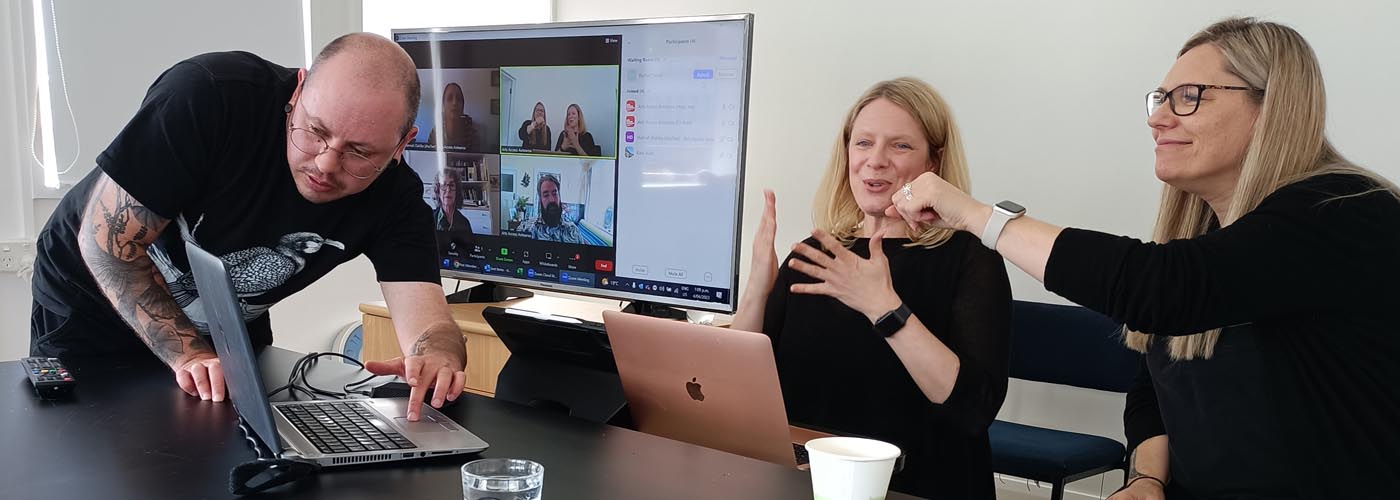
Rāhera also spoke about the importance of growing Deaf expertise within local arts communities. Deaf people bring lived experience and cultural knowledge; arts organisations bring sector and practice knowledge. When these work together from the outset, accessibility becomes more embedded and more effective.
This early involvement helps strengthen partnerships and ensures accessibility work remains grounded in the communities it is intended to serve.
Making space for Turi Māori leadership
Another key theme was the need for more opportunities for Turi Māori to lead within the arts and accessibility sectors.
Rāhera spoke about the complexity of spaces that often recognise either Deaf identity or Māori identity, but not both together. Work such as NZSL karakia and waiata sits at the intersection of language, culture, identity and tikanga, and so it requires more than translation. Supporting Turi Māori leadership creates space for this work to be developed in ways that reflect and honour both parts of that identity.
Don't make assumptions
Perhaps the most consistent message throughout the conversation was also the simplest: don’t assume.
If Deaf people are not attending events, exhibiting, performing or working within organisations, the first step is to find out why by asking the community, not to guess.
Engaging directly with Deaf people and working with Deaf consultants means decisions are informed by lived experience rather than assumption. The barriers may be different from what is expected.
As Rāhera’s responses remind us, building a more accessible arts sector is ongoing work. But when organisations keep listening, learning and showing up, in partnership with the right people and communities, meaningful change becomes possible.