 Arts Access Aotearoa
At a time when arts education is under siege in New Zealand, research shows that creativity improves mental and physical health, writes Nicky Pellegrino in a Listener article (21-27 February 2026).
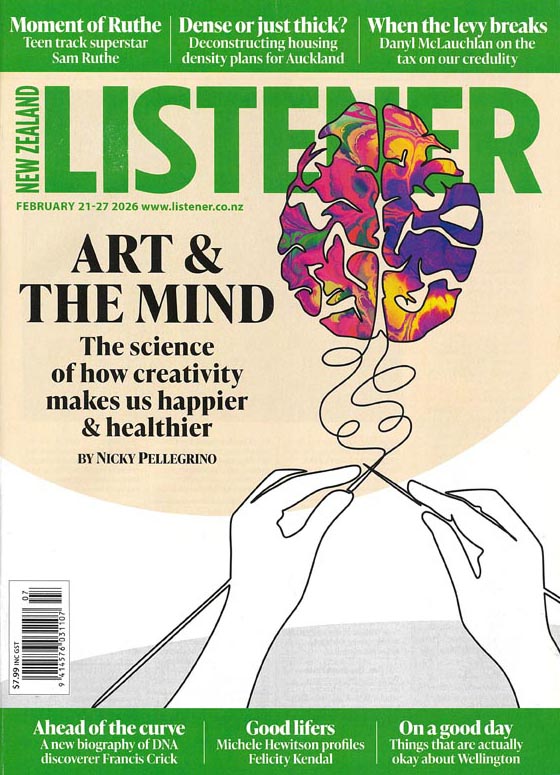 Called “Art for heart’s sake”, the six-page article leads with comment from Toi Ora Director Suzanne Ritzenhoff and artist Ross Berry, who joined Toi Ora after losing his job and his home.
Toi Ora is a creative space in Grey Lynn, Auckland that teaches a range of artforms, including print-making, dance, music, painting and mosaics, and creative writing.
For Ross, Toi Ora provided a sense of belonging, purpose and renewed confidence. Although working again, he still attends his favourite screen-print class once a week and pops in for a coffee to catch up with friends.
“This has been a key part of my journey from having a mental breakdown to where I am now,” he says in the article.
Learning new skills, improving, exhibiting work and getting positive feedback from peers contributes to a wellbeing boost – reinforced by research conducted by QWB Lab showing a 52% lift in happiness and a 48% reduction in anxiety among Toi Ora artists.
"Everyone should be able to enjoy the arts"
The article refers to research studies conducted by Drexel University in the US, King’s College London and the BrainLat Institute in Chile.
“Often, we see visual art, theatre and opera as being for the elite but everyone should be able to enjoy the arts and get the benefit of creative activity,” says Carlos Coronel, a BrainLat researcher.
The article also points to a study by Tamlin Connor, a psychology professor at the University of Otago, which concluded that regular creative activity leads to measurable improved wellbeing in young adults.
How art can make a difference in people’s lives
Professor Peter O’Connor at the Centre for Arts and Social Transformation (Cast) at the University of Auckland, is also quoted in the article. He has spent his career leading drama projects in schools, prisons, hospitals and disaster zones.
At Cast, there are nine teaching artists who are focused on evaluating how art can make a difference in people’s lives. Recently, the team has been working with a group of children in Tonga who were displaced by the 2022 tsunami.
Peter says the children are still living in tents on another island. Many of them had never seen a coloured pencil or a paintbrush before but taking paintbrushes and artists to the children is an act of joy and hope.
Their work will be included in a big exhibition later this year.
Researcher Carlos Coronel says the BrainLat research shows the need for public policies to promote art and creativity as a therapy for health and wellbeing.
The full article of Art for Heart’s sake can be read in the Listener (21 - 27 February 2026). To read the article, please consider taking out an online subscription to listener.co.nz or buying a copy of the magazine. Your purchase or subscription will help ensure the Listener – in print and online – can continue to pay journalists to write in-depth articles.
"Art Cure: The Science of How the Arts Transform our Health" by UK scientist Professor Daisy Fancourt also discusses the benefits of the arts to our health and wellbeing.